


Mera Peak Climbing – Autumn and Spring
5/5 based on 05 reviews

Trip Duration
18 Days
Group Sizes
2
Transportation
Private Vehicle Car, bus
Destination
Nepal
Max. Altitude
6476m
Best Season
March-May, Sep-Nov
Activities
Trekking/Climbing

Difficulty
Challenging
Meals
Inclusive

Start & End Point
Kathmandu
Accommodation
Hotel/Tent house
You may have watched numerous YouTube videos, movies, and documentaries about mountain climbing and wondered if any of the peaks are feasible for you. Well, search no more as our Mera Peak climbing expedition is accessible to you even if you are not a professional climber.
With its three peaks (Central- 6461 m, South- 6064 m, and North- 6476 m), the pyramid of Mera sits quietly in the Makalu Barun National Park touching the walls of Lhotse and Island Peaks. Centrally located in the Khumbu region, this peak stands majestically behind the south wall of Everest as well. On May 20, 1953, a significant milestone was achieved when the Central Peak was conquered successfully by Sen Tenzing and Jimmy Roberts.
We will also walk in the direction of these brave adventurers in our Mera Peak climbing journey and approach the Mera Central Peak from the northern side. It is the easiest and most well-known climbing trail that will lead us to the summit through the 5415 m high Mera La Pass. The Pass opens a wonderful panorama of Kanchenjunga, Makalu, Everest, Chamlang, Cho Oyu, Lhotse South, Ama Dablam, Nuptse, Cho Oyu, and Kangtega.
The equally beautiful sight will behold us from the top of Mera Peak including the bewitching panorama of five of the 8000 m high Himalayas of Everest (8848 m), Makalu (8485 m), Cho Oyu (8188 m), Lhotse (8516 m) and Kanchenjunga (8586 m).
Setting aside the grandest mountain spectacle, our 18-day Mera Peak climbing tour will also walk us through the exceptionally beautiful Makalu Barun National Park, Hongu Valley, and Hinku Valley. We will have a privileged tour of the sacred Panch Pokhari (five lakes) on the route.
The other highlight of our Mera peak climbing journey is the opportunity to spend nights in the warm abode of the amazing Sherpas. Here, we can dive into their traditional life and culture. The surrounding area may be primitive which is well compensated by the warmth and hospitality of the Sherpas- followers of Tibetan Buddhism.
All these factors make our Mera Peak climbing expedition a combo tour that is waiting for your visit. Come and book our trip now and be part of this iconic expedition.
Our Mera Peak climbing journey begins after we fly to Lukla and hike to Paiya. Then, we will direct our path towards the virgin villages of Panggom, Nagindingma, and Cholem Kharka. Passing by the Panch Pokhari, we march towards Mera Peak High Camp traversing through Kothe, Thaknak, and Khare.
After we triumph over the summit, we will make our way towards Khare and direct our path towards Chetarwa. Passing through Chutanga, we will reach the Sherpa town of Lukla , here our journey ends as we board a small plane to Kathmandu.
Namaskar! We are grateful that you chose us as your travel partner in Nepal. Our correspondent will warmly greet you at the exit gate of TIA and take you to the city hotel in a private vehicle.
After resting in the room, you can spend your free time to explore the charm and beauty of the capital. Or, you can simply rest in your room and recover from the possible jet lag.


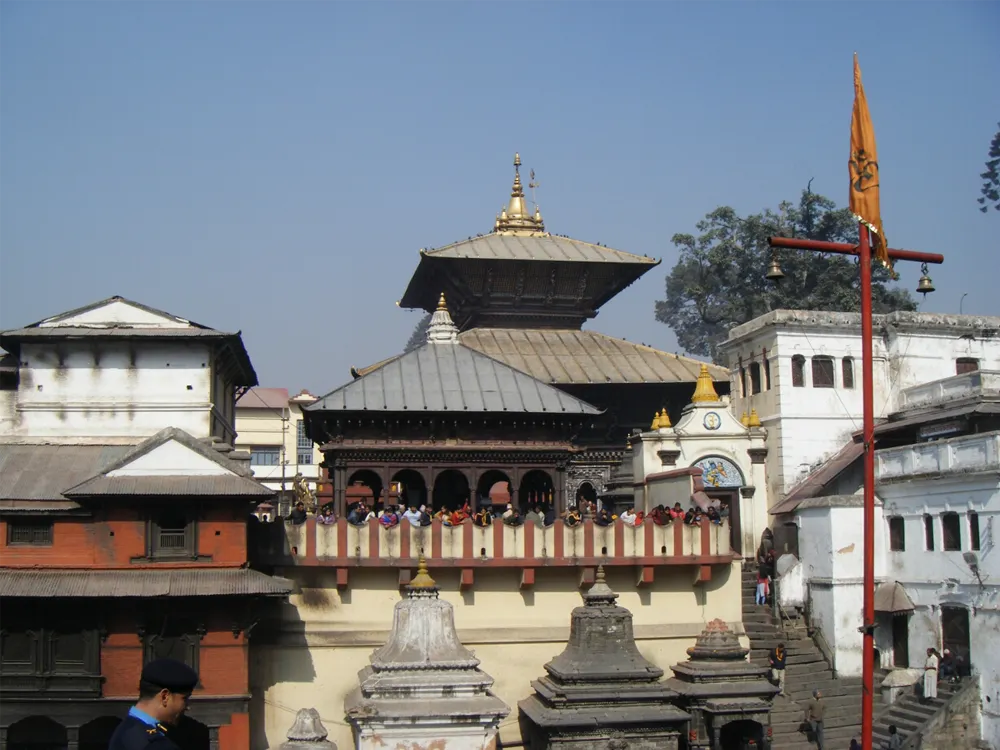
After breakfast, you will meet our team and your group members. There will be a review of the itinerary we have designed for you for our Mera Peak Climbing expedition. Then, we will head for the exploration tour of the Kathmandu City particularly of Swayambhunath, Boudhanath, Pashupatinath, and Kathmandu Durbar Square.
After returning from the tour, please have your dinner and sleep early so you can wake up in time to board an early flight to Lukla.
In the early morning hours, we will drive to TIA and get on a small plane to fly over the massive Himalayan range to reach Lukla. Peeking through the window, you will be able to watch the glistening Everest, Makalu, and Kanchenjunga below your feet.
After about 30 minutes, we will land at the acclaimed Tenzing Hilary Airport where along with our accompanying team, the silver peak of Kongde Ri (6187 m) will receive us warmly.
As our team assembles our luggage, we will eat our breakfast, then we will commence our hike towards the lovely town of Paiya. Our trail first descends downhill steeply for about 2 hours taking us to Surke. The path from here climbs up for another 2 hours to Pake Village.
Now, the trail traverses through the pine and rhododendron forests to reach Chhutak resting at the foot of Kalo Himal ridge. Most trekkers choose to spend the night here but we will advance further to Paiya after crossing the 2945 m high Chhutak La Pass.
The village is a wonderful spot that blesses us with the remarkable panorama of Kongde Ri, Khatang, and Tang Ragi Tu Peaks.
Attention Please
The air traffic in spring and summer at TIA can be congested due to high trekking trips so the Lukla flight will be redirected to Manthali Airport located in Ramechhap Municipality. We will drive for about 4 hours probably in the afternoon shortening the sightseeing tour or at midnight and fly for 20 minutes from Manthali to Lukla airstrip.

We will have a fantastically beautiful day today where we will walk through large forests of rhododendrons, evergreen oak trees, and tiny villages on steep slopes. But first, we will leave our lodge at Paiya and descend down sharply towards Paiya Khola.
Crossing the Khola over a bridge, we will walk up the 3081 m high Khari La Pass and walk down to Khari Khola Valley. The trail now zigzags through the emblematic rhododendron forests and gains altitude until we reach Lenjikharka.
We can see the wild Dudh Koshi River now as we walk up and down towards Panggom. It is a picturesque Sherpa village with huts and local houses with a fantastic view of the Everest climbing route heading from Jiri.
After we leave our lodge in Panggom, we will climb for an hour to reach the top of Panggom La Pass elevated at 3175 m. We will get our first view of Mera Peak along with the beautiful Numbur Peak.
Once over the pass, we will continue for about 2 hours down a steep path to the suspension bridge that crosses over to Hinku Khola. We will stop here for lunch with the amazing Mera and Naulekh Peak at the distance.
After lunch, we will steadily descend through dense forest to the village of Sibuje (2770m). From here, we continue up the forested river valley to Ningsow (2850m) Village. The path again steadily descends towards the village of Nagindingma which has small huts and cow and yak pastures. The lodge here will be our place to sleep tonight.
After an enjoyable breakfast, we will start the day crossing over the 3120 m high Ramailo Danda. The ridge offers one of the most beautiful spectacles of Mera Peak, Mojang Himal, and Sanu Himal. We will then climb the famous Sherpa stairs to reach the Surke La Pass at 3086 m elevation.
We will take a break along the way to eat our lunch. We will then continue through the rhododendron forest and step into the Makalu Barun National Park. Then guided by the bamboo forest, we will come out into the open air of Cholem Kharka.
We will have a remarkable day today although we will have to cross two medium passes, the climb will be pretty hard. After we have breakfast in Jungle Camp, we will begin a steep ascent up the Sherpa stairs towards the first pass of Hurhura Pass at 4286 m. The trail may have little snow and keep an eye out for the amazing snow leopard en route.
Then, we will proceed to cross another high Pass at 4500 m. Just before the top of the Pass, there is a small hut where we can enjoy a cup of hot tea. After going over the Pass, we will climb down to Panch Pokhari. We can have the dazzling views of the Hinku Valley and the peaks of Khyasar Khang and Kusum Kanguru.
Then continuing on an easy 40-minute walk, we will reach to our lodge in Khola Kharka where we can finally rest our legs.
After leaving the Khola Kharka, our path now continues on steep terrain for about 45 minutes toward a pass. Then, the trail runs through a gentle downhill before it gets steeper down to the Majang Khola- a beautiful spot to eat our lunch.
After lunch, we will slowly ascend along the Hinku Khola towards Tashing Dingma. Walking across the bridge over Sanu Khola, we will steadily walk for about 2 to 3 hours to reach Kothe.
It is a small and beautiful village that has some small stalls selling soft drinks and chocolates, and you can also find some simple little local bars.
Today is a shorter trip but we will see the vast difference in vegetation as the forest disappears and some yak pastures here and there take their place. We will start the day with a gentle ascent along the Hinku Khola towards the small shepherds’ houses at Hinku Drangka. The trail ahead leads us to the Gondishung.
A little further, we will discover the small Buddhist monastery of Lungsumgba said to be 200 years old and built on a cave. The Mera Himal, Thamserku, Charpate Himal, and Kusum Kanguru will leave no one indifferent.
Thaknak is already on the horizon; we will walk for one more hour and retire in the cozy warm room in its lodge.
Today it is again a nice walk after Hinku Khola. We will have to deal with some steep climbs but most of the time we climb gradually without noticing the height. From Thaknak, a short half an hour walk will lead us to the 4463 m high Sabai Tsho Lake. Spending some time here really fills us up with renewed energy.
Then our trail runs along the lateral side of the Kharka Glacier which can be slippery at times. The Charpate Himal will keep us company though. Then, we will sharply climb towards the Hinku Nup Glacier all the time watching the Kangtega Peak from the distance.
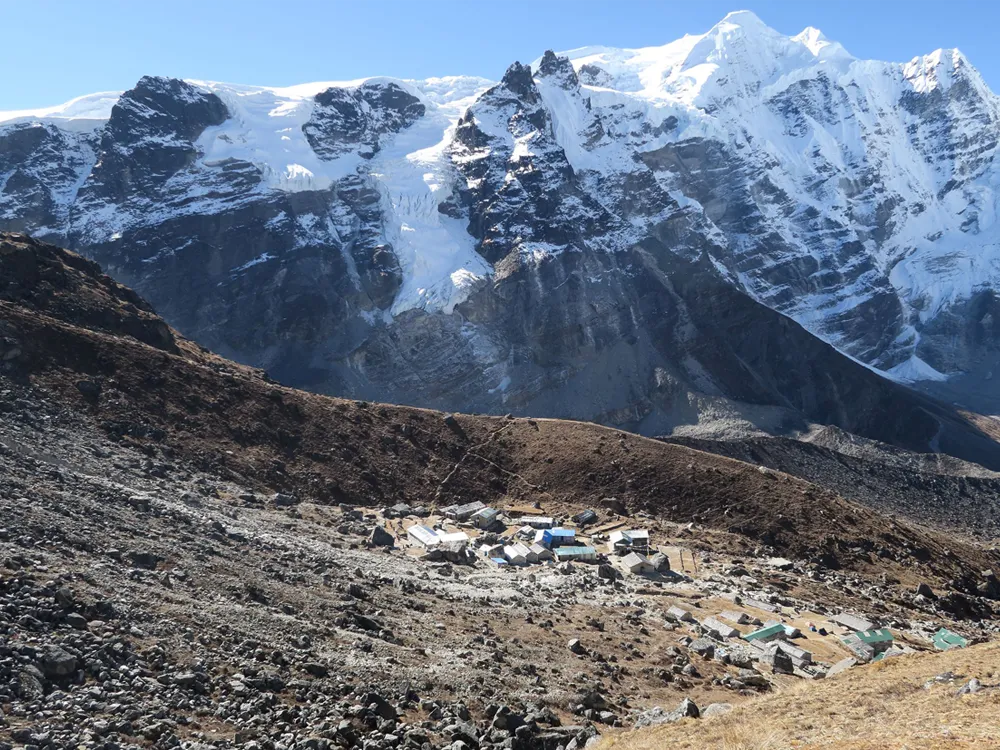
Another glacier of Lhotse Shar will lead us steeply along towards Khare. We can see Mera Peak right in front of us. On arrival in Khare, we eat lunch and check in at the lodge where we will spend the night.
Today we will spend the day engaging in ice walking training and a safety briefing. If you have never used crampons before, you can practice today. After lunch, we will make the needed arrangements for the ascent.
We can also go for an acclimatization climb to a nearby ridge rising at an altitude of 5,300m. the fearsome north face of Mera and the Mera La pass are truly spectacular from here.
After a delightful morning in Khare, we will set off towards High Camp of Mera Peak. We will move carefully and steadily alongside the Mera Glacier to reach the 5415 m high Mera La Pass. Along the way, we will start to see some of the highest mountains in the world such as Makalu, Everest, Lhotse, Pumori, Ama Dablam, Nuptse, Baruntse, Chomolyang, Kusum Khangkaru and Cho Oyu.
A 100 m down the Mera La Pass, most climbers set up the base camp for the Peak. But we will continue climbing along the relatively steep wall which later will ease off a bit.
There are a few sections that need the use of ropes when walking across the glacier, and there are some areas on the glacier where we need to use crampons. It may take us about 5 to 7 hours to reach High Camp.
After setting up the tent and eating our lunch, we will make the final preparations for the climb. We will make sure that everything from climbing equipment to clothing, and accessories is ready.
The big summit day is here! We will rise around 2 am in the morning, and eat our breakfast in our tents. Around 3 am, we will begin our climb to the Mera Peak. The climb up is steep but manageable.
We will go 2-3 people together in the same rope layer upwards. We reach the last part up to the top after a steady climb of 5 to 6 hours. From here we use the cable route that has already been set up and climb up approximately 50 meters using jumar. Soon we will be at the top!
The view from Mera Peak is nothing short of spectacular, we can see five mountains reaching to the elevation of more than 8000 m: Kanchenjunga (8586m), Everest (8848m), Makalu (8463m), Cho Oyu (8201m), Lhotse (8516m). Lobuche (6,145m), Nuptse (7,855m), and Chamlang (7,319m) will also be behind these huge rocky peaks.
After a triumphant moment on the Mera summit, we will begin the descent to High Camp. After eating our lunch, we will disassemble our tents and then hike down towards Khare crossing the Mera Base Camp, Mera La Pass.
We will return to Kothe following the Hinku Valley. Our journey today will be mostly descending taking us through the familiar trail through Thaknak. We will be able to visit again the Buddhist sanctuary carved into the rocks. It will be a pleasant and easier journey after the last few days. After arriving in Kothe, we will have a well-deserved shower.
Following the new and shortest route to Lukla, we will make our way to Chetarwa today. After we depart from the lodge in Kothe, we will follow the ascending trail that runs once again through the cool rhododendron forest. Soon, we will reach a few small ridges. Once over the ridge, we will traverse the tiny village of Mosom Kharka village and start walking along the Hinku River.
We will now exit the Makalu Barun National Park and make our way to Chetarwa nestled between Ama Dablam, Everest, and Nuptse.
A long day of walking today with a crossing of the 4640 m high Zatrwa La Pass. Marching along the Naulekh Himal ridge, we will cross over the Pass and reach the Chutanga Village.
The trail now walks through the pine forest and several yak trails towards Lukla within 3 to 4 hours.
Spending the last morning in between the massive Himalayas, we will now walk to Lukla Airport and fly back to the capital. Upon reaching TIA, our vehicle will take us back to our hotel. Relax in your room, enjoy the comfort, and in the evening, take a walk around Thamel or Basantapur.


The best period that allows the successful ascent of Mera Peak climbing is the spring months of March, April, and May. The snow accumulated from the winter snow is harder and so there are fewer chances of landslides. So if you go to Mera Peak this time, the chances of finding the expeditions are much greater. Besides, the Sagarmatha region turns into illuminous pink from the blooming rhododendrons making the long hiking hours more pleasant and scenic.
The autumn months of September to October are another favorable window when the temperature normally fluctuates between 15 degrees Celsius to -10 degrees Celsius between day and night. The visuals of the mountains are more than spectacular and the climate is drier than other periods.
During the summer (June to August), the high mountain ranges in the Khumbu region are more influenced by heavy rainfall, cloudy mornings, and foggy days. There can be flight cancellations or delay due to unfavorable weather and mosquito and leech infestation prevail on the route.
The winter time of December, January, and February are ruled out due to extreme freezing temperatures.
The Mera Peak climbing expedition stretches to the total distance of around 152 km from Kathmandu taking us to the highest elevation of 6461 m on the top of the summit. The Peak lies 125 km away from Lukla which in turn is located at a distance of 135 km from the capital by air. The distance is reached within 35 minutes of the flight.
In order to reach Mera Peak on foot, we must walk for around 6 to 7 hours daily, covering a distance of 9 to 12 km each day. The highest overnight stop during our climbing expedition is at High Camp, where we will rest at an altitude of 5,780 meters.
During our Mera Peak climbing expedition, we will spend 18 days in total, with 14 days dedicated to hiking through the picturesque settlements of the Khumbu region. Most days will require 6 to 7 hours of walking, although some will be easier and shorter due to planned acclimatization.
On the 10th day, we will walk for only 2 to 3 hours, covering a distance of 5 km from Thaknak to Khare. On the other hand, the 13th day will be more challenging as we travel a total of 17 km while ascending to the Mera Summit from High Camp and descending to Khare within 9 to 10 hours.
Mera Peak is designated as a 1B alpine grade trekking peak in Nepal therefore it is a moderately challenging peak that requires climbers to handle the steep climb of up to 40 degrees on the last section of the climb. Additionally, crossing over the 35 to 40-degree inclined slopes will require the use of ice axes, jumar, ropes, and crampons. Therefore, the peak is more suitable for experienced alpine trekkers who are in good physical shape.
Due to unseen and unthinkable natural risks on the high mountains like Mera, we cannot guarantee of making it all the way to the top. But we want to ensure the success rate of our expedition is around 90 percent.
The potential risk we may encounter on the way to the top of the summit is altitude sickness, therefore, we will keep our pace calm throughout the trip.
We have also scheduled enough time for acclimatization. To make you comfortable in Nepal atmosphere, we have separated a rest day in Kathmandu after your arrival. During the trek, we have planned an acclimatization day at Khare on day 11. As we advance towards the summit, the preceding days involve shorter acclimating walks of only 4 to 5 hours.
Mera Peak climbing is favorable for new climbers and beginners, as it is classified as one of the easiest trekking peaks in the Khumbu region of Nepal. Basic mountaineering gear is required, but our experienced climbing guide will provide you with the necessary skills at Khare and High Camp.
Throughout the ascent, our climbing guide will keep a close watch on you, guiding you through the challenging sections. Ropes will be set up in advance if necessary, and safety checks will be conducted before using any equipment.
Many climbers choose Mera Peak as an acclimatization peak to prepare themselves for future climbs to more advanced and technically challenging peaks like Ama Dablam, Dhaulagiri, Kanchenjunga, or even Everest.
However, we like to remind you that the trekking will be long with some days needing you to tackle the steep ascents and descents. You should be able to walk 9 to 12 km every day for 6 to 7 hours so you must train your legs for such a long hour walk along the difficult mountainous terrain.
The people who cannot walk for long time cannot undertake the Mera Peak climbing expedition. Therefore, we recommend training your body and leg muscles for increased endurance and strength at least 3 months before your departure date. Aerobic exercises such as jogging, squatting, ladder climbing, treadmill workouts, running, and cycling are all beneficial in preparing for the trek.
Trekking in hilly areas near your home can also help you get in shape for the journey. Before attempting any peak in Nepal, engaging in high-altitude trekking is more preferable such as to Annapurna and Everest Base Camps. These treks can help you acclimate to the Himalayan climate and weather.
Our Mera Peak climbing expedition is primarily a teahouse or lodge trek, but you will need to spend a night at a tented camp at High Camp. Our team will handle all camping arrangements, but you must be prepared for basic amenities and a more rustic experience.
Our Mera Peak climbing route will take you through the remote settlements of Paiya, Panggom, and Cholem Kharka, with a brief detour to Panch Pokhari. On our way back to Kathmandu via Lukla, we will be fully acclimatized so we can easily conquer the mighty Zatrwa La Pass, standing tall at 4640 meters.
However, if you prefer an alternative option, you can trek from Lukla to Chutanga and then travel to Thuli Kharka by crossing the Zatrwa La Pass. Eventually, this route will join with Kothe village. Both of these trekking trails offer the opportunity to immerse yourself in the serene natural landscape.
However, this alternate route is more challenging compared to our designed itinerary, as it involves a sudden ascent to an altitude of 3500 meters in the village of Chutanga.
You will experience a rapid altitude transition, starting from Kathmandu and reaching an altitude of 2800 meters in Lukla within half an hour, followed by a sudden ascent to 3500 meters after 4 to 5 hours of hiking. Therefore, your body may feel the strain of such a sudden altitude change in such a short period of time.
Additionally, in just 4 days, you will ascend to an altitude exceeding 4000 m. On our recommended route, however, you will gradually ascend and only reach an altitude of over 4000 m on the 8th day of the trek. However, if you follow the alternative route we have described, you will be able to complete the Mera Peak climbing expedition within 14 days.
Altitude sickness is the biggest risk in the Mera Peak climbing journey. Since our body needs time to get used to the less oxygen in the high Himalayan air, we have planned the daily stages with the gradual gain in elevation.
Still, some of us may not escape from altitude sickness. We may go through headaches, fatigue, dizziness, vomiting, lack of appetite, and shortness of breath. These symptoms may start around 3000 m altitude.
If you feel altitude sickness, you can give your body a day of rest at the altitude you are at, but if the effects persist or are severe, the safest option is always to descend and re-acclimatize.
On the other hand, it is very important to drink a lot of water, as it helps a lot to regulate this altitude problem. Respect the acclimatization days, drink plenty of fluids (mainly water and tea), and avoid alcoholic beverages. If symptoms are mild, take Diamox or Ibuprofen, and if symptoms persist, immediately stop climbing and descend in altitude until symptoms disappear.
Our service for you begins as soon as you land in TIA. At TIA, we will cordially receive you and transfer you to your hotel in Kathmandu in a comfortable private vehicle. We will arrange a whole-day private exploration tour of the capital.
Additionally, we will make all the necessary arrangements for your domestic flights from Kathmandu to Lukla and from Lukla back to Kathmandu at the conclusion of your journey. In case of any flight cancellations, diversion, or delays, we will take you to the Ramechhap Airport on private transport.
In terms of accommodation and meals, everything is well taken care of. You will be staying in a comfortable 3-star hotel in the capital where breakfast will be offered each morning. For lunch and dinner, you can choose your menu on your own.
Throughout the hike, you will have three delicious meals a day (breakfast, lunch, and dinner), along with any type of tea or coffee and fresh fruits every night. When camping, we will supply a camping tent with all required kitchen utensils. Additionally, you will have unlimited meals, tea or coffee, and boiled water available to you.
Nepal Telecom and NCELL mobile networks provide good coverage in most villages along the trek, except for base camps and high camps. You can purchase their SIM cards easily in Kathmandu or Lukla by showing your identification documents. These networks also offer 4G internet services that work well in all villages.
Additionally, local shelters along the way have WiFi connections available for a small fee. You can also charge your electronic devices like mobile phones, cameras, and power banks easily for an extra cost.
Local Area Permit, Mera Peak Climbing from Nepal Mountaineering Association, and Makalu Barun National Park Entry Permit are needed for the Mera Peak climbing journey. Please don’t stress about obtaining these permits as they will be processed by our team in Kathmandu and Lukla on your behalf. The service cost is included in our comprehensive tour cost.
The peaks of Mera, Island, and Lobuche are often recognized as the ideal trekking peaks in Nepal recommended for beginners. Mera Peak stands at 5451 m, Island Peak elevates at 6165 m and Lobuche towers at 6119 m. So Mera Peak is the highest peak and Lobuche is the lowest among the three.
However, Mera Peak is considered the easiest trekking peak in the Makalu Barun National Park. Because the route to the summit is relatively simple, allowing climbers to conquer the peak without the need for advanced mountaineering skills or extensive time and effort.
Island Peak, situated in the picturesque Sagarmatha National Park adjacent to Mera Peak, presents a slightly greater challenge and demands technical skill. There are steeper sections, and higher snowy slopes to overcome that can reach to 45-degree angles in some sections.
Lobuche Peak on the other hand is part of the traditional Everest Base Camp trail which has its own set of challenges. The treacherous glacial crevasses and slope sections demand a higher set of technical skills than the other two peaks.
You will need a backpack, sleeping bag, comfortable trekking boots and shoes/flip flops, long trekking pants, thermal tights, shorts, thermal shirts, short t-shirts, socks, windbreaker/raincoat, hat and cap, gloves, microfiber towel, sunglasses and sunscreen, trekking poles, small bars of soap, headlamp with an extra set of batteries, basic toiletries bag, toilet paper, canteens or bottles, mobile phone chargers or power banks.
The trip to Mera Peak lasts 18 days, of which we spend 14 days on the trek, which is a combination of hard trekking days and active rest days – that is, acclimatization days where we get used to staying in the higher air layers, test equipment and go out on shorter trips.
It is advantageous to carry both US dollars and the Nepalese local currency, the rupee, on this Mera Peak climbing trip. In the teahouses, rupees are the currency of choice, which can only be withdrawn from ATMs in Kathmandu. We will arrange this on arrival in Kathmandu and raise for the entire trek towards Mera Peak as we will not pass banks or ATMs on the trekking tour.
We are attempting the Mera central peak elevated at 6461 m.
If for some reason, you can’t push the summit on the summit day, you can rest at High Camp and wait for the arrival of the climbers. You can attempt the climbing the next day after you discuss it with our guide, team members, and your fellow group members.
2950 US$
Total Cost:
US$ 3350




 Write a Review


