

Why is Manaslu Called Killer Mountain?
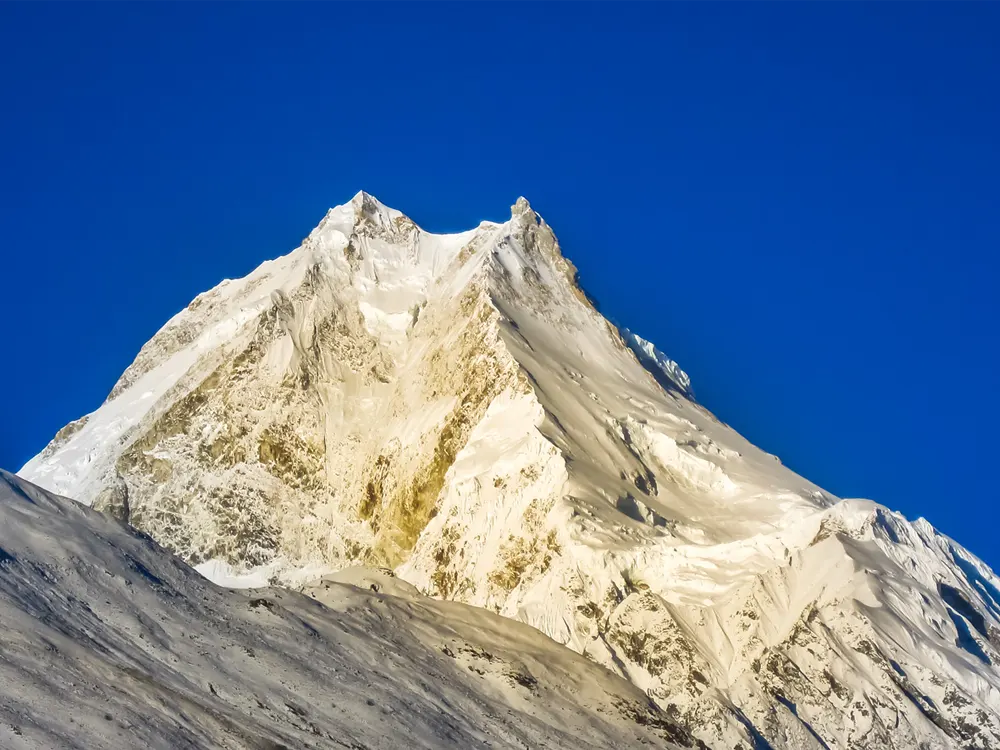
Manaslu Mountain(8163m) is a mountain in the Gorkha district of Nepal. It is the eighth-highest mountain in the world. The peak is a prime trekking destination for the popular Manaslu circuit trek and is appraised as the riskiest mountain with over 60 mountaineers’ deaths.
This eighth-highest mountain has a long history of expedition and climbing attempts. Several unsuccessful attempts were made. But only on May 9, 1956, two Japanese climbers successfully summit the Manaslu peak and make history.
The name “Killer Mountain” given to Manaslu has a history linked to unsuccessful attempts and death tolls. The fatality rate is higher and more than 60 mountaineers have lost their lives as of now. This is the reason behind its nickname and reputation as a risky mountain to summit. So, Manaslu called Killer Mountain.
The main reasons behind the high fatality rate on Manaslu Peak are due to avalanches, mental tiredness, falls, altitude sickness, and being hit by a falling ridge of ice. However, natural disasters have taken more lives than mental tiredness and altitude sickness ever will.
The mountain’s difficult terrains, vertical slopes, and challenging climbing routes make the peak one of the most dangerous mountains in the world. Climbing Manaslu facing these physical challenges fearing the avalanche risk is courageous work.
After the first successful attempts, a large number of summiteers continued to climb this dangerous mountain. All were unsuccessful until the second successful attempt was made by the Japanese team in 1971. The summit was done via the northwest spur of the peak.
However, the number of deaths is still rising. Since its finding by the English mountaineer H.W. Tilman in 1950, several mountaineers have attempted to climb the mountain but failed.The death tolls keep rising.
Today, in this blog, we will know about the reasons behind the high death rate and also the reason behind the reputation as “the Killer Mountain.” So, stay tuned.
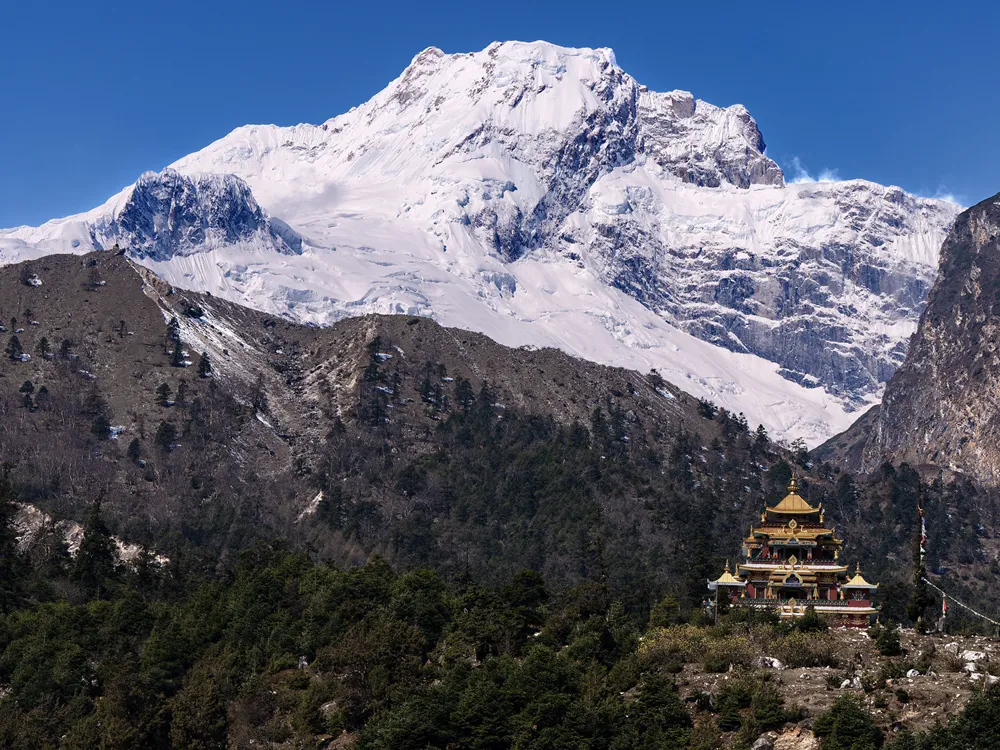
Challenges and Hazards
When climbing, the trekkers have to go through vertical ice walls rock sections, and ice cracks. Without advanced mountaineering skills in ice climbing, rock climbing, and rope techniques, the successful summit of the Manaslu Peak is not possible.
Moreover, the weather conditions of the Manaslu mountain are unpredictable. The weather conditions become harsh when you reach over 5000 m altitude. The trekkers face heavy snowfall, and strong winds making the climbing more challenging.
Also, the Manaslu Peak lies in a remote region where there are fewer human settlements. It poses logistic challenges and difficulty in arranging transportation and accessing supplies. The climbing of the Manaslu Peak requires additional permits also.
In addition, the risk of avalanches is common in the Himalayan region like the Manaslu region. It has a bad history of the avalanche that killed dozens of mountaineers.
High Altitude and Climbing Risks
You must be aware of the altitude-related risks when going for the Manaslu Peak summit. Altitude sickness is seen in the most of the cases. It should be taken care of especially when ascending to the altitude above 8000 m. The oxygen level is low at that level.
The decreased oxygen level leads to acute mountain sickness (AMS). It is the starting phase of altitude sickness. If you see symptoms like headache, nausea, and shortness of breath, then immediately inform your guide or your fellow mate.
The AMS should be treated early. Otherwise, the symptoms can develop into life-threatening conditions. In medical terms, those conditions are called cerebral edema(brain swelling) and Pulmonary Edema(fluid buildup in the lungs).
In some cases, the deaths may occur. The conditions may also triggered by the low atmospheric pressure. At low atmospheric pressure, the body’s ability to use oxygen becomes ineffective. The low atmospheric pressure is common in high-altitude areas.
Some Examples of Incidents and Mountaineer’s Death
Several incidents and accidents have happened during the summit of Manaslu Peak since it was first discovered. Those accidents resulted the serious injuries and the death of mountaineers. Some of the incidents that were major headlines at sometimes are given below.
- September 23, 2012: 11 mountaineers were killed. The death occurred after an avalanche suddenly broke out during the climbing of Manaslu peak. Six mountaineers were gone missing at that time.
- September 2022: two climbers died during the summit. One died due to being buried in the avalanche and another died at the summit.
- October 2022: The American ski mountaineer Hilaree Nelson went missing. Later on, her body was recovered.
- October 2022: a snow avalanche killed a Nepali guide near camp 4. The avalanche also injured the 13 mountaineers and guides.
The above-mentioned list is just some of the examples of the incidents. There are several other minor incidents happened that took the lives of the mountaineers and guides. It is said that the mortality rate is 9 deaths per 100 successful ascents.
Popular Climbing Routes and Challenges
The risky climbing route also makes the summit of the Manaslu Peak challenging. The popular climbing route to the summit is via the northeast side of the peak. This route requires technical glacier crossing, steep ice walks, and a technical final summit push.
The first step of the itinerary starts with the trekking from Samagaon to base camp within a single day. This includes ascending through a scenic forest and lake area. In the next step, the trekker ascend from base camp to camp 1(5,500m). The trekkers trek through a glacier crossing a small ridge to reach the camp 1.
The route then further goes through a challenging section from Camp 1 to Camp 2. This section is a little more challenging than the journey from base Camp to Camp 1. The trekkers have to cross the glaciers that have cracks, ridge, and slope ice walls.
After reaching the Camp 2, the trekker start their journey to the camp 3. The camp 3 is at an altitude of 7500m. If the snow conditions are stable and avalanche risk is moderate then, the trekkers will be able to complete the journey.
From Camp 3, the final climb to the summit starts. It is a 600 m climb. If the weather is stable, then it is time for the final part of the summit. The trekkers have to climb the rock section and must have Technical snow-climbing skills.
After reaching the top of the Manaslu, the trekker quickly descend following the ropes. This marks the successful summit of the peak. But, there is a high number of deaths till now. There are other routes also but this one is popular.
Best season and off-season challenges
The best season for the Manaslu peak climbing is spring and autumn season. This season has the record of the highest success rate with spring 50% and autumn 75-80%. During these seasons, there is less snowfall and the temperatures are mild. The avalanche risk is also less.
In contrast, the off-season poses a high risk and challenges. The success rate of Manaslu peak climbing drops to 1-2% during the winter season. It is due to heavy snowfall, high winds, freezing temperatures, and access to limited resources.
In addition to off-season peak climbing, the weather conditions are harsh and snowstorms are hard to predict. During winter time, the snowfall is at an all-time high. There is a high risk of avalanches too. Due to the avalanche, the paths become more difficult to navigate.
Spring and autumn are the best for Manaslu peak climbing that doesn’t mean that the challenges are not there. There will be still challenges that require technical climbing skills and knowledge.
Limited Rescue and Medical Services
The Manaslu Peak is in a remote location. Rescuing in case of any medical emergency can be challenging and problematic. Even during the injuries, medical help is not available due to the remote location and challenging terrain.
Also, logistics and transportation management is more difficult in remote locations. Transporting the necessary things to the destination where it is needed is not easy. Things are not easily available in the Manaslu region including food, fuel, and medical equipment.
Due to the less human settled area and less network, the is also the communication problem. Sometimes, the death also happens due to the lack of communication at the time of emergency. The timely rescue operations are hampered toe to poor communication.
Final Words with Tips
The reason behind everyone calling the Manaslu mountain, a killer mountain is the high death toll of over 60 humans. The death rate is influenced by the steel slopes, deep cracks, and avalanche-prone areas of the peak.
The weather conditions change rapidly. There is the risk of high winds, blizzards, and extreme cold. To minimize the risk, the trekkers should choose the spring and autumn season. This season has a higher success rate than the other seasons.
Despite the various difficulties and large number of fatalities, the climbing of the 8000m peak like Manaslu is a big achievement for serious mountaineers. Due to the risk associated with the peak, fewer people attempt to climb the peak.
However, for the successful climb of the Manaslu peak, the trekkers should prepare strategically. They must have technical climbing skills and equipment-using skills. Proper physical training and mental resilience with strategic acclimatization practices are needed for a successful summit.