


12 Days Annapurna Base Camp Trek
5/5 based on 05 reviews

Trip Duration
12 Days
Group Sizes
10
Transportation
Tourist Bus
Destination
Nepal
Max. Altitude
4130m
Best Season
March- May & Sep- Dec
Activities
Trek

Difficulty
Moderate
Meals
B.L.D.

Start & End Point
Kathmandu
Accommodation
Hotel/Tea house
12-day Annapurna Base Camp Trek (ABC) is one of the most popular and fantastic trekking destinations in the Annapurna Region of Nepal, adored by adventure lovers from every nook and cranny of the world.
This trek provides a once-in-a-lifetime experience that should be added to your bucket list if you love hiking. This 12-day Annapurna Base Camp Trek is also called the Sanctuary Trek.
The travelers will be able to experience the breath-taking panoramic scenery of the beautiful Himalayas, dense subtropical rhododendron forests, alpine river valleys, traditional Magar and Gurung village life, mesmerizing waterfalls, breathtaking mountain landscapes and forestry, some of the world’s highest peaks, and beyond that they can ever imagine.
The Annapurna Base Camp Trek will undoubtedly be the best and money-worthiest for any adventure seeker who wants to experience the heavenly beauty of the Annapurna Region.
The 12-day trek to Annapurna Base Camp is rated as moderately challenging. Therefore, to familiarize themselves with the field of trekking adventure, even beginner trekkers who are willing to start their journey are advised to start at Annapurna Base Camp trekking.
There are many routes within the region. Each of the routes provides travelers with distinctive impressions and unforgettable experiences. The entire Annapurna region trek is an adrenaline-filled adventure and home to a diverse community, revealing the culture and traditions of the locals.
Likewise, Annapurna base camp trek begins from Kathmandu to Pokhara (the beautiful city of lakes, which is the second-largest city in Nepal after Kathmandu). You will be taking the short drive from Pokhara to Hile, where your hiking journey officially starts.
The trek follows a scenic route: Hile, the starting point of trekking, heading to Poon Hill via Hile-Ghorepani, passing through villages like Sinuwa and Himalaya Hotel, and reaching ABC. During the return journey, you’ll pass through Bamboo, Pothana, and Phedi, each with its charm.
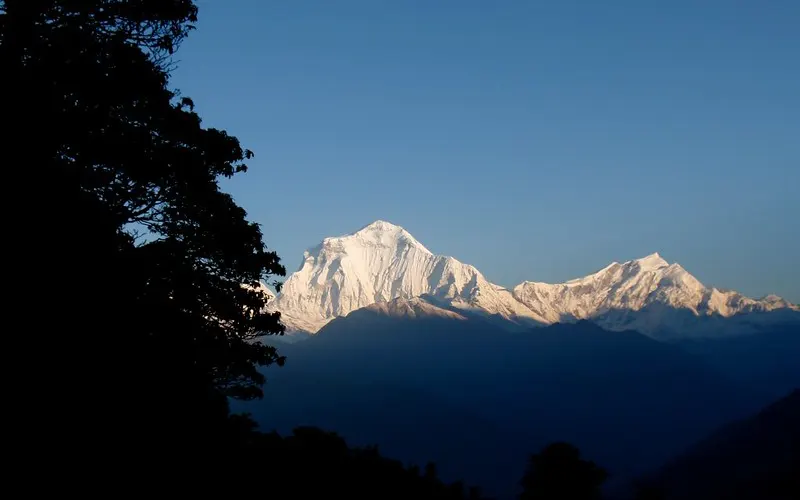
You will be able to soak in the beauty of astonishing views of snow-capped mountains like Annapurna I (8,091 m), Dhaulagiri (8,167 m), Machhapuchhre (6,993 m), Annapurna South (7,219 m), Nilgiri (7,061 m), Tukuche (6,920 m), Gangapurna (7,455 m), Hiunchuli (6,441 m), and many others, which will refresh your soul on your trail.
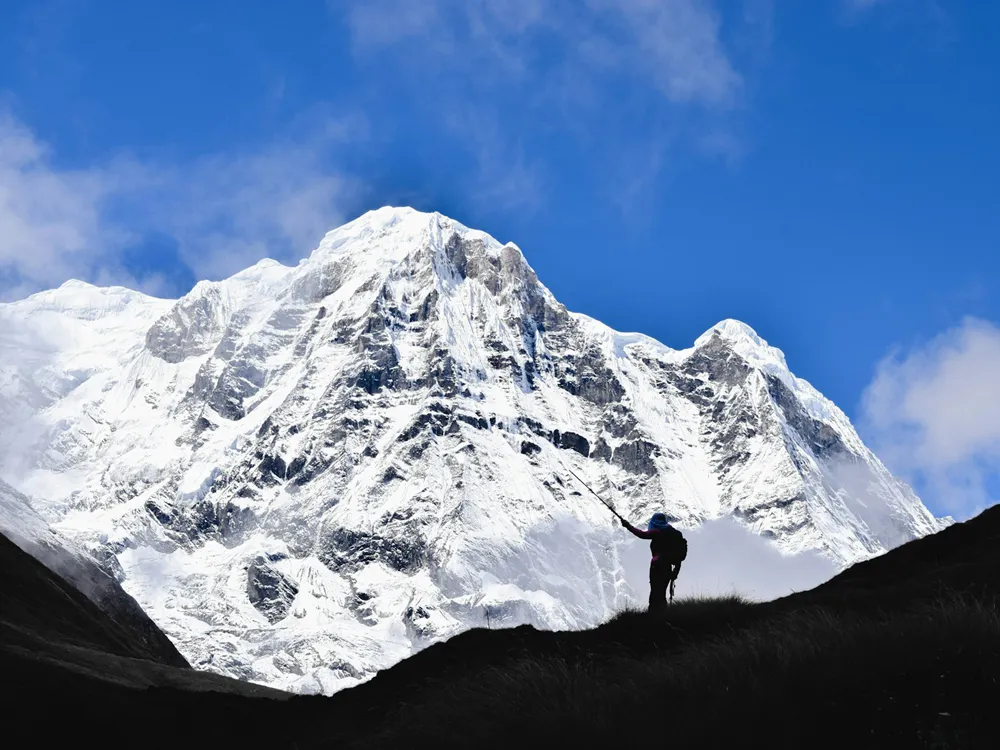
When you reach Annapurna Base Camp, you will be spoiled with splendid photogenic scenery, including a close view of Annapurna I, which is the tenth-highest mountain in the world with a staggering 8,091 meters in elevation during this Annapurna Base Camp Trek.
In addition, you will encounter small communities along the route where the Gurung and Magar people would genuinely welcome you. You will also be able to savor tasty, simple dishes. Because Nepalese people are so gracious and friendly, you will enjoy every moment you spend with the locals.
Overall, this 12-day Annapurna Base Camp Trek journey will energize, inspire, and, most importantly, make you cheerful. Our guides will also assist you in gathering the essential information and guiding you on this magnificent excursion.
Finally, we’d like to add, pack your luggage and join us on this adventure to make unforgettable memories. We guarantee that this will be an amazing and lovely experience, capturing the breathtaking grandeur of the sceneries at every moment. It will be a life-changing adventure you’ll never forget.
Today is the first day of our journey to the 12-day Annapurna Base Camp Trek. We’ll head to Pokhara after having breakfast. We’ll start our scenic drive of around 200 kilometers by taking a tourist bus, which usually takes 7-8 hours.
If you wish to travel by flight, it will cost you an extra charge of 125 dollars per person. You’ll reach Pokhara in around 25–30 minutes by flight, offering an aerial view of gigantic mountains. However, you do not have to pay for the tourist bus, as it is included in your package.
When we reach Pokhara, we will be greeted by tranquil sceneries and green hills surrounding it. You may enjoy the many stores, pubs, and restaurants in the Lakeside neighborhood.

This is our third day of the wonderful 12-day Annapurna Base Camp Trek. We’re traveling to Ghorepani, a popular and picturesque village at an elevation of 2840 meters. After our great breakfast, we will climb to Ulleri. It’s a long, hard climb. We have to climb through Ulleri’s famed stone stairs before passing into Banthanti village.
We can see colorful forests, especially during the spring, on our trail. We’ll follow the trail through a lush rhododendron forest with pink flowers and cross a small bridge before reaching the village of Ghorepani.
After reaching Ghorepani, we’ll be surrounded by towering peaks like Dhaulagiri, Annapurna South, Hiunchuli, and Annapurna. Ghorepani is divided into two parts: lower Ghorepani and upper Ghorepani. They are about 100–200 meters apart, connected by stone stairs. We’ll head to Upper Ghorepani, as it will be more convenient for the next day. We’ll stay here overnight.
On this fourth day of the 12-day Annapurna Base Camp Trek, we are going to wake up very early in the morning to catch the sunrise from Poon Hill, which is the highest point of the day at 3210 meters.
From there, you’ll enjoy a 360-degree panoramic view of the Himalayas, including Mt. Annapurna, Machhapuchhre, Dhaulagiri, Fishtail, and Himchuli. The sight of the first rays hitting the snow-capped mountains will be breathtaking and unforgettable.
After taking in the panoramic views, we’ll return to Ghorepani for a wonderful breakfast. Following breakfast, we continue our trek to Tadapani, a height of 2610 meters. We’ll travel through enchanted rhododendron forests and breathtaking scenery.
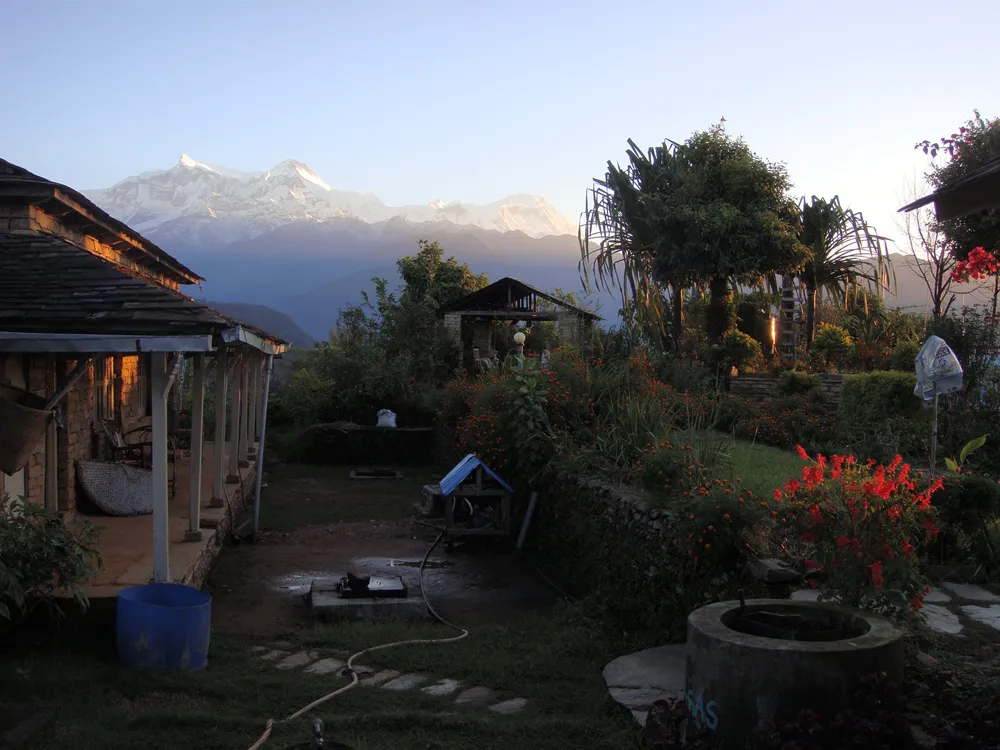
Tadapani is a quiet village surrounded by mountains where we’ll relax at a teahouse or lodge. It’s the perfect spot to unwind after a day of trekking and make lasting memories. We’ll stay overnight here in Tadapani village.
We’ll begin our morning journey after enjoying a delicious breakfast at Tadapani’s teahouse. We have beautiful views of the Fishtail and Dhaulagiri mountains. Our last destination today will be Sinuwa, which is 2340 meters above sea level.
We’ll follow a pleasant slope until we reach Chhomrong at 2170 meters when the gradient will steepen. Along the route, we’ll pass by villages like Chuile, Kimrong Khola, Talung, and Ghurjung, which are famed for their rich Gurung and Magar cultures.
It will take an hour to get to Sinuwa from Chhomrong village. After arriving at Sinuwa, you’ll notice that it’s quiet, with only a few teahouses and lodges for basic accommodations, where we’ll also spend the night on the fifth day of our Annapurna Base Camp trek.
Today marks the sixth day of our journey, which is half a journey that will be completed according to our 12-day Annapurna Base Camp Trek. We’ll hike after eating our morning breakfast. We’ll hike through a forest with ferns, oak trees, bamboo, and rhododendrons.
As we climb higher, we’ll see fewer trees. The path steeply descends to a rocky area and then goes through thick bamboo forests along the west side of the river gorge.
We’ll walk through bamboo and then rhododendron forests until we reach the Himalayan Hotel at 2,900 meters. This will be our final stop of the day, where we’ll spend the night at a guest house.
Today you’re going to be very excited because on this seventh day of the Annapurna Base Camp trek, we’ll be heading towards the highlight of our trek, which is the ABC.
After having breakfast at the Himalaya Hotel, we’ll begin our trekking journey. We’ll be trekking through a snowy trail, depending on the season, passing through different places like Hinku Cave and Deurali.
When we reach ABC, located at 4130 meters, you’ll see breathtaking peaks like Annapurna I and Machhapuchhre from a 360-degree angle, which will fill your heart with happiness and joy.
ABC’s campsite is surrounded by tall mountains, creating a breathtaking panoramic vista from which you’ll spend the night under the stars, experiencing nature at its best.
Today we are going to say goodbye to the photogenic and beautiful Annapurna Base Camp and return to Bamboo, which is at an elevation of 2345 meters. We’ll wake up early to see the sunrise over the Himalayas, have breakfast, and then trek down 1600 meters along the Modi Khola River Valley.
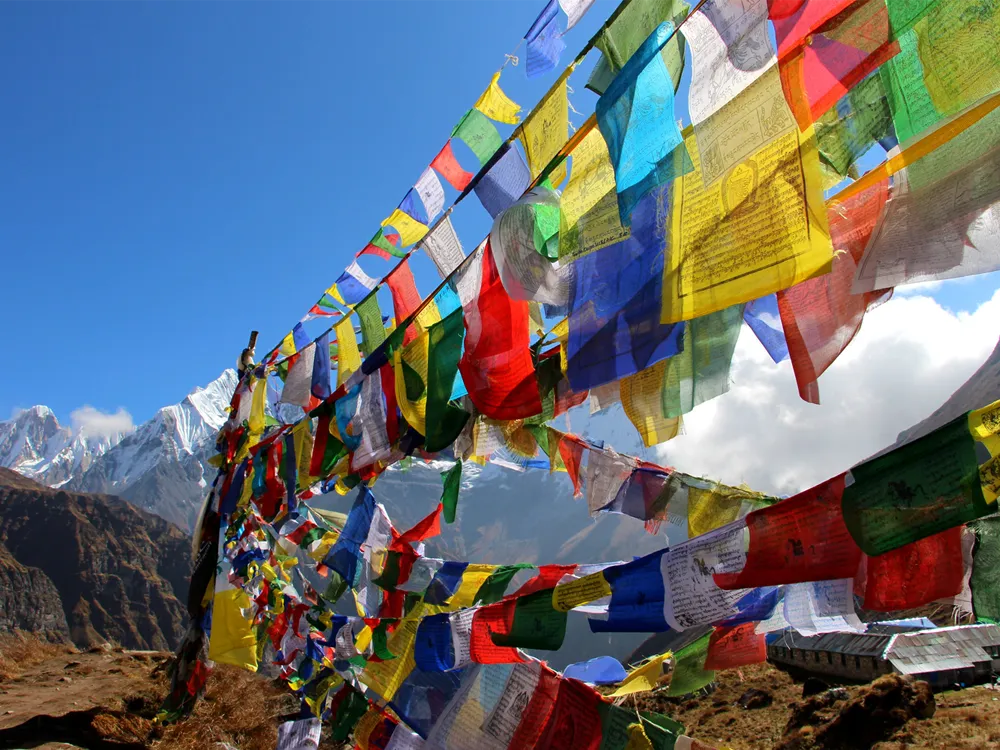
You can also take a short climb to an area above the base camp to enjoy additional breathtaking scenery, such as memorial stupas and prayer flags. The panoramic view of mountains such as Annapurna, Dhaulagiri, Fishtail, and Himchuli is amazing.
We’ll pass through forests until we reach Bamboo Village, where we’ll stay overnight in a teahouse. The next day, we’ll continue your journey toward Jhinu Danda. This journey, starting today, will be our return journey home.
We’ll be walking down to the Jhinu Danda from Bamboo after a mouth-devouring early morning breakfast. Our day today will be more relaxed, letting you enjoy the breathtaking beauty of the Annapurna region at a leisurely pace.
We’ll pass through forests and terraced fields along the Modi Khola River, where you’ll be treated to stunning views of hills, valleys, and traditional villages along the way.
We’ll trek around 6 kilometers, which will take us 5-6 hours to reach Jhinu Danda. After arriving in Jhinu Danda, you spend some time relaxing in the natural hot springs near the settlement. After relaxing in the warm waters and serene surroundings, your body will feel lighter.
This will mark the ninth day of our 12-day Annapurna Base Camp trek. We’ll stay overnight here. The day at Jhinu Danda will be the perfect way to refresh yourself before your return to Pokhara the following day.
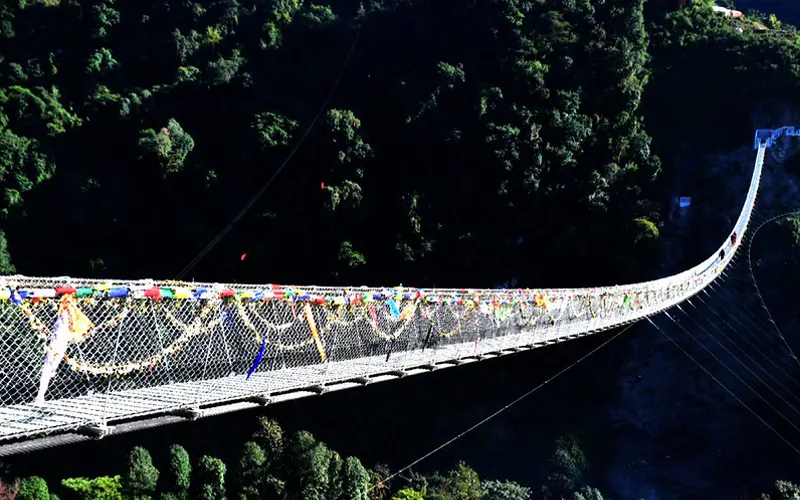
We’ll trek to Pothana from Jhinu Danda after breakfast early in the morning. We’ll walk through beautiful landscapes and cross the suspension bridge over the Modi Khola. This path will take us toward Landrung village, which is also famous for its Gurung community and scenic landscapes of lush forests and agricultural fields with panoramic vistas of the Annapurna and Dhaulagiri Mountain ranges.
From Landrung village, we’ll walk through Tokla and Bichkok Deurali and descend for about an hour until we reach Pothana, which is located at 1990 meters in height. After walking for 6-7 hours in total, we will reach Pothana, where we’ll stay overnight.
This is the eleventh day of our 12-day Annapurna Base Camp Trek package. We’ll trek down to Phedi after eating a delicious breakfast in Pothana. We’ll be hiking for about 3 hours to reach the small Phedi village at an altitude of 1500 meters.
Then, we’ll be using a private vehicle to drive to Pokhara. We’ll leave Phedi village after having lunch and resting for some time. Finally, after reaching Pokhara, you can explore the city and enjoy the city’s nightlife. This will be the last night in Pokhara, where you’ll spend the night.


Nepal generally enjoys mild and pleasant weather most of the year. Before starting the Annapurna trek, it’s essential to research the expected weather conditions for the time of year. The Annapurna Base Camp trek reaches elevations above 3500 meters and passes through sparsely populated areas, which makes it important to plan the trek according to the region’s weather during the travel time.
For this Annapurna Base Camp trek, the best time will be during the spring and autumn seasons. In these two seasons, the weather is warm and the skies are clear. Vibrant and colorful Himalayan landscapes with blooming flowers along the trails add beauty to the stunning scenery. This trek features everything from vast forests to rugged mountains because of its diverse region.
After the heavy monsoon rains, autumn starts to offer moderate temperatures and warms the conditions at higher altitudes. Our trekking region, Annapurna, will be a rain-shadow area that will receive occasional showers during the monsoon.
It clearly indicates that you will be able to trek to Annapurna Base Camp even in the summer, but the views from the peaks may be obscured by clouds. Another scary thing will be the lower trails, which can become muddy and slippery due to heavy rainfall.
The preceding paragraphs offer valuable insights into the ideal times for the Annapurna base camp trek. Below, we will delve deeper into the two best seasons for this trek in detail.
Autumn (September, October, and November): Most people agree that autumn is the ideal season to trek at Annapurna Base Camp. This season extends from September to November, offering pleasant weather and the best scenic beauty. The beautiful skies that allow us to witness magnificent vistas of the majestic Himalayan peaks make October the best month of the year.
During these seasons, trekkers will be able to enjoy the pleasing view of the beautiful mountains throughout the trip. We can’t deny the fact that monsoon rains are the main reason for fresh and vibrant looks in the autumn. The green landscapes and colorful leaves of plants add a visual appeal to the trekking trails, which enhances the overall trekking experience. Autumn temperatures are moderate, which makes trekking comfortable.
The best thing about this season is that even though the temperature gradually starts to decrease as the season progresses, the weather conditions remain favorable for trekkers to trek, which makes it a pleasant time for adventures to explore the Annapurna region. The natural beauty of the environment, with crisp air and awesome views, makes this season the perfect time to trek because trekkers can enjoy the best of what the Annapurna region has to offer during this season.
Average Temperatures:
September: 20°C (max) to 0°C (min)
October: 16°C (maximum) to -6°C (min)
November: 11°C (maximum) to -10°C (min)
Spring (March, April, and May): Spring is the second-best time for trekking to Annapurna Base Camp, just after autumn. These are often the ideal months for trekking because the snow begins to melt and the bright sky allow us to see beautiful views of the snow-capped Himalayan peaks. Most hikers agree that now is the best time of year for spectacular landscapes and pleasurable hiking adventures.
During spring, forests come alive with brilliant flowers and hues, producing a beautiful visual spectacle along the trekking trails. This season offers rising average temperatures, which softens the harshness of the weather and allows trekkers to enjoy the route without being too chilly. The moderate climate is a significant advantage of trekking during this season.
Overall, the hiking trails are dry and safe to hike on because of the excellent weather and little rainfall. Because of these various characteristics, spring is a highly suggested season for this hike.
Average Temperatures:
March: 4°C (max) to -8°C (min)
April: 8°C (maximum) to -4°C (min)
May: 14°C (max) to 0°C (min)
The 12-day Annapurna Base Camp Trek offers an unforgettable adventure trekking experience. Beginning from Nayapul after a jeep journey, observe impressive natural scenery from Pokhara. The trek continues hiking for around 2–3 hours to reach Hile. In this adventurous journey, you will be traveling through diverse landscapes. You have to gradually climb to higher altitudes, which will get you used to climbing the higher altitudes along the way.
After reaching the highest altitude, which will be at Annapurna Base Camp, which is at 4130 meters (13,550 feet) high and offers breathtaking views of the nearby Himalayan peaks, this moderate-level trek covers about 115 kilometers and usually takes 7 to 10 days to finish, depending on the route and how fast you walk.
Returning to Kathmandu on the twelfth day completes the trek, offering a full-circle experience of the trekking adventure. We request trekkers throughout the journey and encourage them to communicate any signs of altitude sickness to their guides in case trekkers need any prompt assistance and adjustments to ensure a safe and enjoyable journey.
In the Annapurna Base Camp Trek, just as every trek has its challenges, altitude sickness often raises difficulty for the trekkers. You will be trekking at 4,130 meters (13,550 feet), which involves tough challenges like steep paths and long climbs. Carrying your backpack makes it difficult.
Every day, we have to walk for an average of 5-6 hours, and the weather might change fast, making trekking difficult. Even if the difficulty level is modest, novices will find it challenging. However, there is no need to fear; with the proper training and mental preparation, almost everyone can conquer these hurdles.
As we ascend, the air will become thinner, potentially causing altitude sickness, often known as acute mountain sickness (AMS). Altitude sickness is the most common fear when trekking at high altitudes because it becomes somewhat more difficult to breathe as you ascend higher due to the thinner air.
Among the most common signs of altitude sickness are headaches, nausea, exhaustion, and dizziness.While hiking, it is essential to pick up the signs of acute mountain sickness (AMS). If AMS is ignored, it can soon become fatal.
It is possible to avoid altitude sickness, however, if we first adjust to the lower altitudes, for example, at Chhomrong, and then slowly when we move up to higher levels. Hikers should be stressed about being careful while pointing out that they should be aware of the dangers, hydrate, eat healthy foods as well as avoid accidents at all times.
You need to walk averagely around for 6-7 hours. The 12-day Annapurna Base Camp itinerary involves hiking from Nayapul to Hile. Nayapul will be the starting point as well as the first day of trekking, on which you have to walk for 2-3 hours to reach Hile.
This is not an easy-level trek. So, you have to walk a maximum of 6-7 hours per day when you are hiking to Poon Hill, Sinuwa, the Himalaya Hotel, and ABC. The shortest days where you have to walk a minimum walk per day on the second and the eleventh day where you’ll walk only 2-3 hours, which will be easy for you.
The 12-day Annapurna Base Camp trek includes accommodations options like teahouses, camping, and hotel/lodge stays. You will stay at a standard hotel in Kathmandu, but you have to pay for the food while you are here.
During the time of trekking, teahouses are the most common and popular choice for accommodation on the ABC trek. You’ll find basic rooms with twin-sharing wooden beds, mattresses, pillows, and blankets. You can also get services like hot and cold showers, electric heaters, and attached bathrooms, in some accommodations. However, these services are limited upon reaching higher altitudes.
During this whole trek, our package covers all your accommodation and three meals a day, including a cup of tea or coffee. Every night after supper, you will be offered fresh fruits to help you stay healthy and energized. The menus include a range of options, with Dal Bhat Achaar being a particular favorite. You can order noodles, soup, sherpa stew, momos, pizzas, eggs, and pasta, as well as beverages like ginger tea, milk tea, and black tea.
We urge that you consume plenty of veggies and hot beverages for energy and hydration. Non-alcoholic and soft drinks are available on this trek but are not included in your package; nonetheless, we recommend that you avoid them for a healthy and enjoyable voyage.
Annapurna Base Camp Trek provides numerous alternate paths based on your interests. Here are some of the alternative ways described below for you to choose:
Annapurna Circuit Trek: The Annapurna Circuit Trek is lengthy and difficult, requiring approximately two to three weeks to accomplish. It includes a vast area, up to 5416 meters high Thorong La Pass. During this fascinating journey, you will see a variety of landscapes and learn about Buddhist beliefs.
Mardi Himal Trek: Mardi Himal Trek can be preferable to you if you like the calm less populated way, which is 5 to 6 days long. The mountain views are most picturesque from different angles in which the beautiful range of Annapurna and Machhapuchhre Peak are visible.
Annapurna Base Camp Trek via Poon Hill:This route is best suited for those who want to travel both Poon Hill and Annapurna Base Camp at the same time. It starts at Nayapul and goes through Ghorepani, Tadapani, Chhomrong, and then to ABC. You’ll create a lot of memories and moments in different famous villages of Nepal in the Annapurna region, like Ghorepani, Poon Hill, Tadapani, etc.
Ghorepani Poon Hill Trek: This trek is for those adventurers who have limited time in Nepal. This trek will be very easy compared to other routes that take only 4-5 days. You can enjoy the amazing views of snow-capped mountains such as Annapurna, Fish Tail, Nilgiri, Tukuche, Gangapurna, and others.
The Short Annapurna Base Camp Trek: This is also a famous route that is suited for trekkers with limited time. It takes just 4–5 days to complete. However, because there is less time to acclimate, it is recommended only for experienced trekkers. If you are a beginner, you might find it difficult to adjust to the altitude in a very short time.
Khopra Ridge Trek: The Khopra Ridge Trek is a hidden trail that takes 7-8 days and offers stunning views of the Annapurna range and Dhaulagiri Mountain. It is a tough hike through remote villages. But you will have a once-in-a-lifetime experience with a lot of adventures on the trail.
The Annapurna Base Camp Trek is a fairly challenging trek that is suitable for both beginners and experienced ones. An individual with good physical fitness can complete this 12-day Annapurna base camp trek without any special climbing skills.
However, you must be aware of the physically demanding trek routes, so trekkers should be mentally prepared to walk at higher altitudes with around 5–6 hours of hiking each day.
If you encounter any issues during the trek, our experienced guides are always there to assist in the best way possible. Still, it will be better to prepare yourself physically as well as mentally before deciding to participate in this trek.
The 12-day Annapurna Base Camp Trek involves a long, rough, and high-tourist-altitude tour. It is much more effective to acquire strength through exercising, for that reason, you should start practicing working out several months before you are on the way to the mountains.
To start this preparation, you can start doing some cardio and strength training exercises. Similarly, to increase the physical fitness of your body one can start doing such things as bicycle riding, stair climbing, etc. which will help you increase your stamina.
You can also include the training of the upper body such as pull-ups, pushups, and squats to instate a progression in whole-body strength and fitness. This practice will make you less lethargic during six or seven hours of trekking daily.
You can find Wi-Fi, electricity, and hot showers in most of the teahouses during this 12-day Annapurna Base Camp trek. You can charge your electronic devices, take hot showers, and use Wi-Fi at many teahouses, but there is usually an extra charge for these services.
Once you ascend to higher altitudes, these facilities are limited, and electricity and Wi-Fi may not be very reliable. The better alternative is to use a local SIM card for more consistent internet access. It’s also advisable to carry rechargeable batteries and solar power banks in case your device’s batteries run out during the trek.
However, you should keep these things in mind and trek only after the necessary preparation and considerations. You should carry extra cash for internet and charging to avoid any problems and make your travel experience comfortable.
For the Annapurna Base Camp Trek, you’ll need two permits: an ACAP and a TIMS card. These licenses allow you to visit the Annapurna Conservation Area Project. The fees for acquiring these permissions are listed below:
Annapurna Conservation Area Permit (ACAP):You can enter the Annapurna Conservation Area with a permit. For foreign visitors, the permit costs around NPR 3000 (USD 26) per person, whereas SAARC citizens pay around NPR 1000 (USD 9). You need to show two passport-sized photos, visa copies, and a photocopy of your passport to the Nepal Tourism Board in Kathmandu or Pokhara.
Trekkers Information Management System (TIMS) Card:A TIMS card is crucial since it records trekkers’ information and aids in rescue operations if necessary while hiking in Nepal. If you have any difficulty obtaining the permit, we will help you. The cost of this permit is around NPR 2000 (USD 18) per person for foreign nationals and NPR 300 (USD 4) for SAARC nationals. You can receive the permit by submitting the same paperwork as for the ACAP permit.
Our 12-day Annapurna Base Camp Trek package covers all transportation costs. But you have to pay 125 dollars per person if you decide to fly to Pokhara from Kathmandu. If you want to take a flight during the return from Pokhara, it will cost you 250 dollars per person for the Kathmandu-Pokhara-Kathmandu plane journey.
We’ll drive you there by tourist bus if you want to enjoy traveling by road. We’ll use a private vehicle to drive between Pokhara and Nayapul. And during our return journey from hiking, we’ll again use the same private vehicle from Phedi to Pokhara. Finally, we’ll be returning via tourist bus to Kathmandu from Pokhara, concluding your journey.
Travel insurance is essential for a trek like Annapurna Base Camp. It’s always better to be on the safe side because you will be trekking at high altitudes where the mountain environment can present various challenges. Unpredictably, if you encounter any health-related problems or accidents, the insurance will be there to cover your emergency medical evacuations, which can be costly without coverage.
We recommend that trekkers have travel insurance to protect themselves from unexpected activities that may happen during the trek at Annapurna Base Camp. We will be providing you with a list of recommended travel insurance company options that will offer you good coverage.
Insurance will help you cover a range of unfortunate risks, including injuries, emergency helicopter rescues, trip cancellations, and other liabilities that might arise during this trek.
To really enjoy your 12-day climb to Annapurna Base Camp, you should purchase travel insurance before you set out. Having insurance will relieve you of the burden of worrying about unforeseen circumstances or crises throughout your vacation.
Trekking at Annapurna Base Camp, you will be amazed and deeply impressed by the breathtaking and magnificent beauty of the Annapurna Mountains, which promises a journey filled with diverse challenges with varied landscapes and high altitudes. There will be vibrant rhododendron forests and lush rice paddies among the natural delights that you can discover. Your experience of trekking at a high altitude will be unforgettable if you commit to five to six hours of hiking every day.
Our walk will be much more exciting due to the chance of unpredictable weather, making it an unforgettable experience. If you are trekking at Annapurna Base Camp during the spring and autumn seasons, then your journey will be even better because these seasons typically offer clear, sunny days. It will be worthwhile to prepare for sudden weather changes so that we will have a safe journey.
Every good thing, as we all know, has a terrible side. Altitude sickness is a risk at higher elevations in the Annapurna Base Camp case study. But there’s no need to be concerned. The happiest and safest travel will be achieved by adjusting to the surroundings and taking frequent rests while drinking enough water.
The ABC is located around 4,130 meters above sea level, which offers breathtaking views of the Himalayan surroundings.
The greatest distance covered by this trek from Nayapul to our ultimate destination, Annapurna Base Camp, is around 45 kilometers (27.96 miles); thus, our daily hike will be between 4 and 5 kilometers.
Yes, you will be able to use local cell phone networks like NCELL and NTC on this trek, though network coverage might be limited in some areas at higher altitudes.
Regretfully, the hiking trails do not have ATMs. We recommend you have enough cash on hand in case of unforeseen costs.
Of course! In the Annapurna region, trekking alone is legal, so those with a spirit of adventure can explore the trekking trails on their own.
For Annapurna Base Camp, you should bring or purchase arm clothes (down jacket, innerwear, hats, beanie, gloves, neck gaiter, hiking boots, warm socks, towel, hiking pants), and water bottle.
Crampons are not necessary at Annapurna Base Camp. Good hiking boots and trekking poles are enough. However, if you trek in early spring (January or February), you may require crampons owing to heavy snowfall.
At higher altitudes, you may have a problem with acute mountain sickness (AMS). Altitude sickness typically starts at 3,600 meters. So, you need to strictly avoid caffeine, alcohol, and smoking, drink at least 4 liters of water daily, and walk slowly. And we’ll be there to help you avoid and manage AMS.
You need to walk 5-7 hours each day, depending on the terrain and where we’re headed.
You should drink garlic soup, green tea, lemon tea, and hot lemon ginger tea upon ascending to higher altitudes. Moreover, you need to aim to drink 2-4 liters of water daily. You need to avoid alcohol, caffeinated drinks, and hot chocolate at high altitudes at any cost for your own health.
1099 US$
Total Cost:
US$ 1130




 Write a Review


