


Bhutan Druk Path Trek | 8 days
5/5 based on 05 reviews

Trip Duration
8 Days
Group Sizes
10- pax
Transportation
Flight & Tourist Vehicles
Destination
Bhutan
Max. Altitude
4090m
Best Season
Mar-May , Sep-Nov
Activities
Trek/Tours

Difficulty
Moderate
Meals
B.L.D

Start & End Point
Paro
Accommodation
Hotel & Tent
The Druk Path Trek is a beautiful and accessible high-altitude trek between the historic towns of Paro and Thimphu in Bhutan. This moderate trek of six days stretches over dense pine forests, along alpine meadows and across mountain ridges.
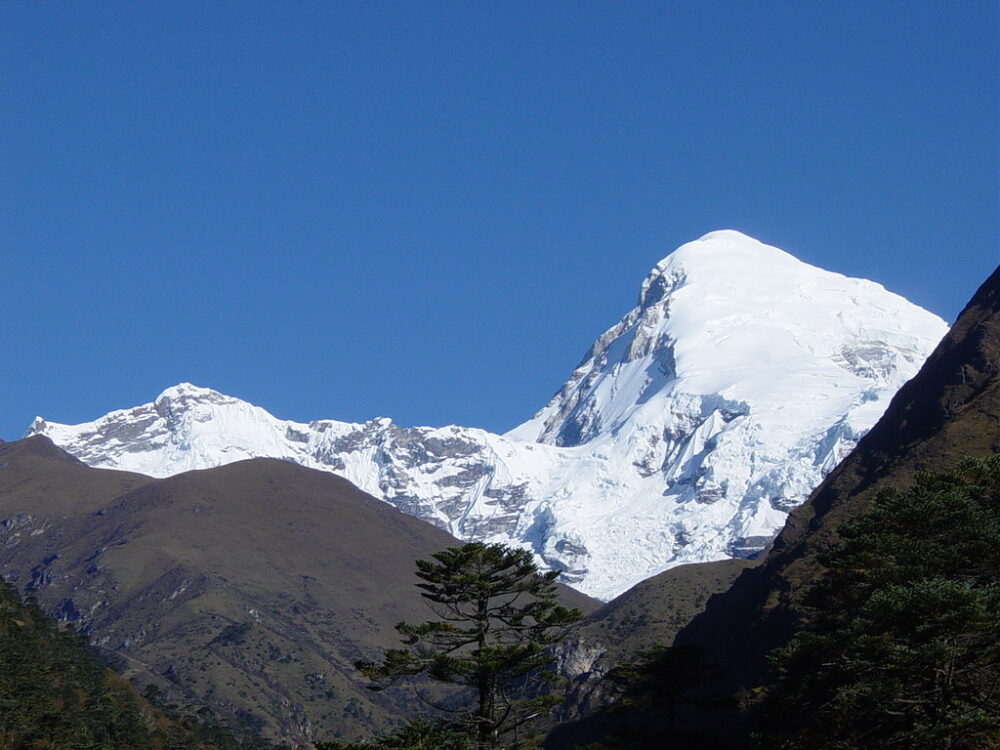
The trip has marvelous views of the Himalayan peaks, including Mount Gangkar Puensum. While requiring far less time commitment than those longer treks in Bhutan, the Druk Path Trek provides them with the experience of Bhutan’s unexplored wilderness.
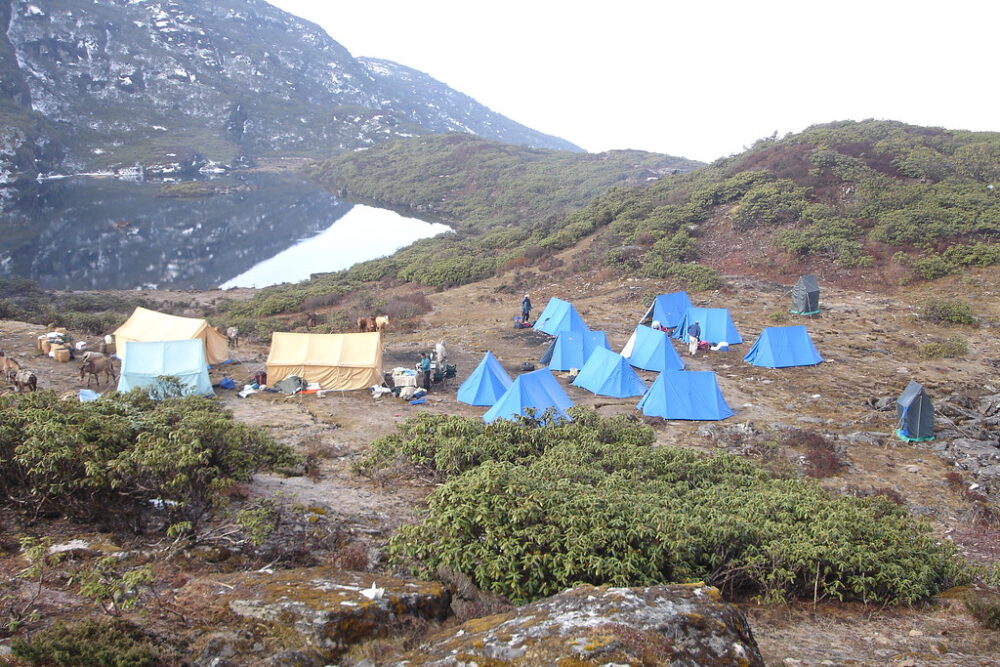
Trekkers around along the way, passing ancient monasteries, and isolated yak herder camps and visiting the sacred glacial lakes. There are highlights such as Jele Dzong, Jimilangtsho Lake, and Simkotra Tsho that hold significance from both cultural and natural terms.
Acclimatization is also important, with the most considerable height of the trek at Simkotra Tsho at 4,110m (13,484ft). Highly maintained trails, knowledgeable aides, and a combination of reproduction and culture make the Bhutan Druk Path Trek an unforgettable method to investigate Bhutan’s pure scene.
For those looking for a combination of adventure, culture and striking landscape, the Druk Path Trek is the right option. While a lot more strenuous treks in Bhutan draw the attention of experienced hikers, the Karankhola Trail is an easier yet rewarding high-altitude experience.
Its breathtaking wide view of the Eastern Himalayas such as the Jomolhari, Jichu Drake and the Gangkar Puensum are one of the greatest attractions of this trek. In addition to trekking through the land of the Thunder Dragons, where a deep dive into Bhutanese culture and spirituality involves historic dzongs (fortresses), ancient monasteries and pristine alpine lakes, the Bhutanese also have one of the highest per capita expenditures on health.
Although the trek is close to both Paro and Thimphu, easy to access, it remains hidden and peaceful, far away from crowded tourist trails. The trek offers a perfect combination of challenging climbs, serene landscapes and cultural encounters that everyone visiting Bhutan simply can’t do without.
Your adventure starts in the capital of Paro, which is the home to the only international airport of Bhutan. Breathtaking views of lush valleys, and mountains soaring into the Himalayas, welcome you as you are descending.
Arriving at the city, you will meet your guide who will accompany you to your hotel. This day is reserved as an acclimatization day as Bhutan’s altitude is higher than most travelers are used to.
If you are up for a little walk, then you can explore Paro town, visit Rinpung Dzong or take a walk in the local market. It is important to adjust smoothly to the altitude, to keep hydrated and avoid strenuous activities. Enjoy a warm Bhutanese meal in the evening and prepare for the adventure ahead in the next day.
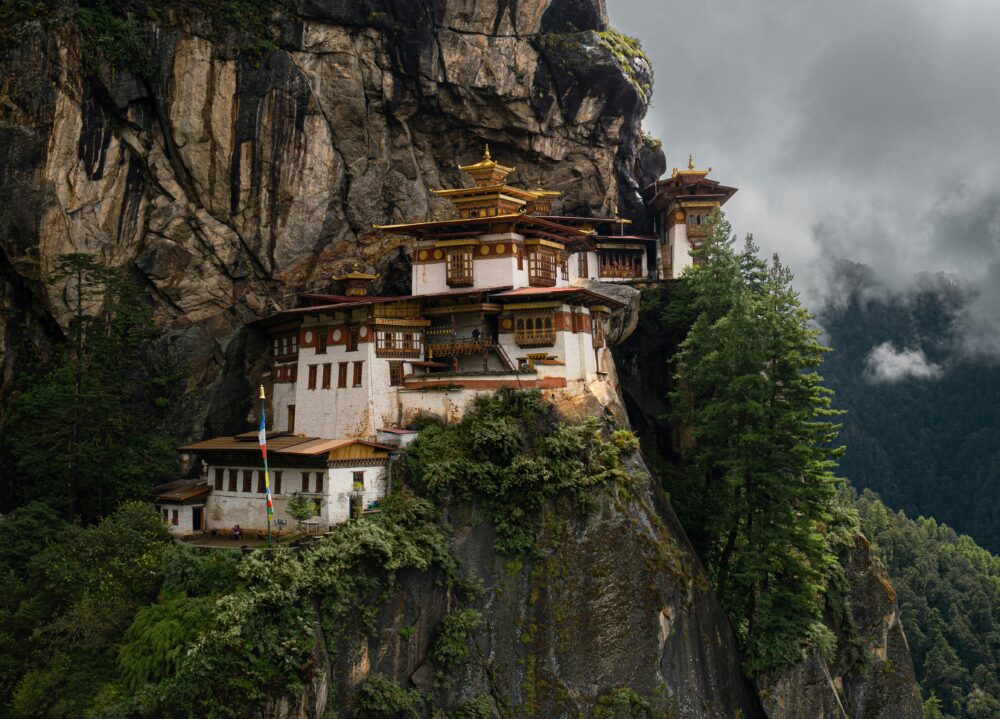
Today you will start off searching Bhutan’s most celebrated landmark Tiger’s Nest Monastery (Taktsang Monastery) for 4 to 5 hours of hike. This spectacular site, should be a must visit as it sits dramatically perched on a 900m high cliff.
Pine forests, colourful prayer flags and tiny teahouses are but some of the trail’s inclusions. Halfway there you’ll get the viewpoint café with magnificent views of the monastery. The path of ascent is steep stone steps up to the entrance of the monastery itself.
Also inside are Buddhist shrines and meditation caves. Once done drenching in the spectacular scenery, you will be brought back to Paro to have a rest.


Druk Path Trek Bhutan will best be enjoyed in spring (March to May) or autumn (September to November). Weather, skies, and temperatures are stable during these seasons and are very comfortable; hence trekking is enjoyable and very stunning visually.
The lush forests come alive with rhododendron blooms come spring. Days are warm, sometimes 10°C to 20°C but nights can be cold, 0°C to 5°C. It is very visible and shows clear pictures of Bhutan’s snow-covered peaks.
The season of autumn is also certainly another perfect time, being that it is cold and golden, and the rain is less. However, there are clear skies and temperatures similar to spring.
Heavy snowfall can make the winter (December to February) difficult at high altitudes, and the monsoon season (June to August) is rainy with slippery trails. It is advisable to put in your plans during the spring or autumn so that you get the best in your experience.
Weather Conditions on the Druk Path Trek
With Bhutan’s high-altitude mountain climate, the Bhutan Druk Path Trek’s weather goes through various changes. Seasons change the weather significantly, so adequate preparation is a must.
In spring (March to May) the temperatures range from 10°C to 20°C by day but will cool down to 0°C to 5°C at night higher up. Weather normally is stable and dry but you can occasionally see some cloud cover over the place.
In Autumn, from September to November the temperatures are similar to spring with clear skies and stunning mountain visibility. This is one of the most pleasant times to trek and preferred by the majority of travelers.
At night, especially near Simkotra Tsho (4,110m), winter (December to February) is harsh, temperatures can also drop below -10°C (14°F). Trekking is made difficult by snowfall which can block trails.
During monsoon season (June to August) there are heavy rains and consequently muddy and slippery paths. Lower sections will be warm, and higher can be misty and cold. To trek comfortably, layered clothing, waterproof gear and thermal protection has to be packed.
Druk Path Trek is a trek for beginners and experienced trekkers too as it is a moderate trek. The entire trek takes place over 6 days in which the total distance covered is approximately 50 km (31 miles). Daily trekking also takes between 3 to 6 hours.
The biggest challenge is altitude as the trek goes up to a maximum altitude of 4,110m (13,484ft) at Simkotra Tsho. Although the ascent is moderate, altitude illness is common, so you need to acclimatize.
The terrain consists of forest trails, open ridges and steep ascents but no technical climbing is required. The biggest climbs are from Jele Dzong to Jangchulakha and then close to Simkotra Tsho. The weather is unpredictable and trekkers need to be prepared for cold temperatures at night.
All in all, with proper preparation, a moderate level of fitness and a guided trek, the Bhutan Druk Path Trek is a very accessible and rewarding adventure.
The Druk Path Trek Bhutan is not very difficult, but a good physical preparation will make the experience better and even minimise the chances of getting fatigued or catching altitude sickness. The preparation of trekkers should be at least 4 to 6 weeks before the trekking.
Cardio and endurance are both required. Building stamina is a process, which can be achieved through activities such as hiking, jogging, cycling and stair climbing. Leg strength exercises (such as squats and lunges) also improve stability, because there are a couple of ascents and declines in the trek.
If you are going to high altitude trekking, you should hike in the hilly or uneven terrain with a loaded backpack (5 to 8 kg). Altitude effects can also be managed by practicing controlled breathing techniques.
As such, it is necessary to pack light but warm clothing, trekking boots, trekking poles and hydration packs. Spending an extra day in Paro before the trek is key: Acclimatization is key here. The Druk Path Trek is an enjoyable, memorable trek so long as you expect it and prepare for it.
Preparation for the Druk Path Trek can not be overstated because there are many different patterns of the weather and terrain one will encounter in the Bhutan trek. This Is a high altitude trek and should be layered properly.
Buy moisture wicking base layers, and an insulated and waterproof outer shell. To beat the cold at night a warm hat, gloves and thermal socks come in very useful. For rugged trails, strong and worn hiking boots with high ankle support are required.
Sleep is restful in a high quality sleeping bag rated for sub zero temperatures. There are some items that are essential, such as trekking poles, sunglasses, trekking poles, headlamp with extra batteries and sunscreen for UV protection.
Hydration is important to prevent dehydration so you will need a hydration system or a reusable water bottle with purification tablets. Biodegradable soaps, wet wipes, and little towels come in handy as personal hygiene items.
The most important item here is a first aid kit with altitude sickness medication included in it. Finally, lightweight high energy snacks and a little bit of money for small purchases is an added trekking feature.
Although the Druk Path Trek Bhutan ascends to over 4,000 meters, it is very important to acclimatize to avoid altitude sickness. If the body can not adjust, symptoms such as headaches, dizziness, nausea, shortness of breath are common.
The way to acclimate properly takes its time on steep ascents, and follows the ‘climb high, sleep low’ principle. The body adapts to lower oxygen levels by drinking through at least three liters of water daily and intake of carbohydrate rich foods.
To lessen the risk of altitude sickness, it is suggested to completely stay away from alcohol, or at least heavy exertion, in the first few days. Emergency supplies such as oxygen and Diamox as an antidote to the effects of altitude such as nausea and headaches, are carried by trekking guides that also monitor for symptoms.
If the symptoms are severe then you must descend to a lower altitude. Hike to Tiger’s Nest is considered to be an acclimatization day, that helps condition the body. The basic to proper preparation and awareness leads to a safer and happier trekking.
The Bhutan Druk Path Trek goes through breathtaking monasteries and dzongs that show Bhutan’s rich Buddhist heritage.
Jele Dzong is an ancient fortress in a ridge supplied with awesome views of Mount Jumolhari, which serves as a highlight. It has a small dzong, which has a revered statue of Buddha Shakyamuni.Further down the trail, the trekkers come across Phajoding Monastery, a sacred place, known for its meditation retreats. Situated above the city of Thimphu, it overlooks the headquarters of Bhutan and provides wide views from a peaceful place.
It also provides vistas of remote lhakhangs (temples) where monks make your daily prayers. Intertwined with intricate murals and prayer flags, the chortens give an impression of Bhutan’s spiritual devotion.
It must be visited properly observing etiquette of removing shoes before entering and dressing modestly. The Druk Path Trek proves to be not just a physical but also a spiritual trip as it explores these monasteries that provide the one of a kind insight of Bhutan’s religious traditions and architectural marvels.
The Druk Path Trek is very cultural, since every corner of Bhutan is enough of an indicator of its rich cultural heritage. Enhancing the Bhutanese people’s way of life, they believe in ‘Gross National Happiness’ instead of material wealth.
It is an integral part of everyday life for men to wear the gho and women to wear the kira. Through the trek, trekkers can pass through remote settlements where they could encounter local yak herders, still living in the age-old traditions.
Along the trails colorful prayer flags carry blessings in the wind, spinning prayer wheels and chortens are (one) way to participate in Buddhist spiritual practice. Bhutanese village acts as a close community holding honest respect for nature and hospitality.
However, it is central to Bhutanese culture; stories are told by oral tradition, and folk dances and religious ceremonies are performed. The trekking here offers you an opportunity to understand Bhutan’s cultural heritage and at the same time, spiritual life. The Bhutan Druk Path Trek offers an opportunity to meet Bhutan’s living heritage at every step.
Bhutanese cuisine consists of a unique combination of strong flavours, with influences of chili, as well as dairy products. Ema Datshi, a spicy chili and cheese stew, is the national dish and can be found in almost every meal.
The trek can be supplemented by traditional Bhutanese dishes that camp cooks concoct to provide trekkers energy rich and nutritious food along the Druk Path Trek Bhutan. Some of the dishes included for Jhanet are Phaksha Paa (pork with radish), Jasha Maroo (spicy chicken stew) and momos (dumplings).
What you will have are vegetable curries and lentil soups, the foundation of which are red and white rice. In the cold mountain climate, butter tea (suja) supplies warmth to the body and ara, a local alcoholic drink, is sometimes offered in villages.
Dried yak cheese is a high protein snack which can also be tried out by trekkers. The cuisine in Bhutan brings alive the trekking experience and keeps the trekkers fed up for the demanding trails.
The Druk Path Trek gives a chance to enjoy Bhutan’s colorful festivals (Tsechus) which undoubtedly form a part of its cultural and religious identity. Trekking offers the experience of attending the famous Paro Tsechu festival which is held annually in spring, if timed accordingly.
The occasion does include masked dances, traditional music and the unfurling of a giant sacred Thangka. Apart from that, the Thimphu Tsechu celebrated in the capital is another great festival where the elaborate performances tell Buddhist teachings.
Local monks perform spiritual rituals and dances in colorful costumes during smaller village festivals along the trekking route. At the same time, religious ceremonies as well as social gatherings where communities gather and celebrate in an environment of great joy constitute these festivals.
If the trek abides during the Tsechu, it provides the extra cultural dimension and allows travelers to experience Bhutan’s devotion to its traditions and the colorful expressions of the spiritual heritage.
Bhutan’s main international gateway is by air only and Paro is the only way to get to Bhutan. Flights to Bangkok, Delhi, Kathmandu and Singapore are operational by Drukair and Bhutan Airlines.
Paro international airport, however, is one experience for its own with the landing surrounded with dramatic Himalayan peaks. Phuentsholing has overland entry, but flights are the commonest route.
A visa is required to visit Bhutan and must be arranged through a licensed tour operator before arrival. A daily mandatory Sustainable Development Fee (SDF) is required by the government in accommodation, meals and guide.
The natives of India, Bangladesh and Maldives can enter visa free but still need an entry permit. A valid passport for at least 6 months is needed. An entry permit is issued to tourists arriving by air at Paro and by other means (overland) at the border. Proper documentation will make your entry into Bhutan for trekking experience as smooth as can be.
It is required by the tourism regulations in Bhutan to hire a guide when going for the Druk Path Trek Bhutan to ensure safety and culture preservation. One advantage is expert navigation, and insight to Bhutanese history and culture; second advantage is help with logistics.
It also guides in handling altitude sickness and in emergencies, making it safer. Moreover, they make campsite arrangements and prepare food so that the trekkers can concentrate on the experience.
There, however, can be cons for some trekkers to the structured nature of guided treks. Some independent trekkers who like to have freedom may not favor a drive itinerary. The overall trekking expense is also increased by the cost of hiring a guide and support staff.
However, with all these drawbacks, Bhutan’s regulations provide a bottom to top approach which allows the traveller to have an immersive and well organized experience.
Contrary to other Himalayan treks, Bhutan’s contribution is to make solo trekking impossible, thus improving the sustainability and keeping unique cultural heritage. In general, a guided trek is an enriching and hasslefree experience that’s worth paying for in my opinion.
This Druk Path Trek cost is dependent on the trekking season, the number of people and the level of comfort you choose.
Bhutan requires a Sustainable Development Fee (SDF) of $200 per person per day (and $100 for Indian citizens) that includes accommodation, meals, a licensed guide and transportation. There are also visa charges ($40) as well as personal spending such as travel souvenirs and tip for guides (if desired).
Prices for a standard 8 day trek begin from $1,800 to $2,500 per person, depending on what your operator includes. Other luxury options can cost more than $3,500, premium accommodations and extra services included. The flight costs to Bhutan vary from $300 to $1,200 depending on the departure location.
Although Bhutan’s trekking costs are higher than neighbouring Nepal and India, you pay all for a cost effective fee which proves to be truly all inclusive. The expense is reflective of Bhutan’s commitment to high value, low impact tourism and gives an exclusive and well managed trekking adventure through truly pristine landscapes.
Bhutan has a policy of protecting its culture and environment by means of “High-Value, Low-Impact” tourism. A Sustainable Development Fee for foreign tourists is included, which is obligatory, and regulates visitor numbers and channel money for conservation and community development.
This policy strengthens trail maintenance and protects fragile ecosystems for the trekkers and at the same time protects cultural heritage. Bhutan doesn’t allow too much mass tourism, so Druk Path remains so beautiful, unlike the majority of trekking routes used by mass tourists.Guides and itineraries are prearranged and use is mandatory to ensure the minimum damage to the environment and a richer cultural experience.
Although this policy raises travel costs, it does guarantee absolutely exclusive access. With fewer trekkers, trails are less crowded, services better and experience is more authentic Bhutanese.
Bhutan is still one of the world’s most sustainable trekking destinations, blending tourism with the preservation of culture and environment.
Bhutan’s pristine forests and alpine lands lie within the trail of the Druk Path Trek that passes through disparate varieties of flora and fauna. Starting with pine, fir, and rhododendron forests, which are awe inspiring in spring when the rhododendrons have shades of red, pink, and white. Dwarf junipers and alpine meadows are at higher altitudes.
The wildlife sightings include the blue sheep, Himalayan musk deer and taking, the national animal of Bhutan. Himalayan monals, blood pheasants and the rare satyr tragopan can be spotted by the bird enthusiasts.
But the region is home to everpresent snow leopards and red pandas. Yaks can be seen grazing at the high pastures along the route. Bhutan is also a sanctuary for endangered species where the government intervenes to ensure conservation.
The Druk Path Trek is one of the best opportunities to visit an unspoiled Himalayan ecosystem and, as such, a nature lover’s and wildlife aficionado’s paradise.
Being a photography tour, the Druk Path Trek cradles several wonderful photography opportunities in Bhutan’s most awe inspiring landscapes, monasteries and high altitude lakes.
The first glimpse of Bhutan’s rugged beauty comes from Jele Dzong, a fortress in ancient times perched on a ridge. The trail climbs up to Jimilang Tsho and Simkotra Tsho, two pure divine glacial lakes, ringed by mountains, which make them perfect for sunrise and sunset photography.
A dramatic location combining the spiritual and scenic beauty, is the Phajoding Monastery overlooking Thimphu Valley. On clear days, the Himalayan backdrop makes the perfect Mount Jumolhari and Jichu Drake.
Besides, the prayer flags fluttering over the ridges adds to the vibrant colors in a composition. Other subjects include wildlife and traditional yak herder settlements.
Druk path treks are created by ever changing light and mist rolling through valleys, and this trek is a pilgrimage of paradise for photographers. Every solid step is a visual delight in capturing Bhutan’s untouched landscapes and its cultural heritage.
The Druk Path Trek is more than a stunning trip, it provides an unique atmosphere that enables the trekkers to get closer to Bhutan’s culture and nature.
One such experience involves camping by sacred high altitude lakes like these, believed to be abodes of mystical spirits, as with Jimilang Tsho. Visits to yak herders give an insight into Bhutan’s nomadic culture, and a taste of fresh yak cheese and butter tea is on offer.
A few spiritual highlights are visits to Jele Dzong and to the Phajoding Monastery, where it is not unusual to see monks in devotion to meditation and ancient Buddhist rituals. The mystical experience is enhanced by trekking through forest areas having prayer flags and hidden chortens. Unforgettable is stargazing in unpolluted night skies at high altitude camps.
Alternatively, there is an element of cultural experience such as trekking during Bhutanese festivals. Beautiful scenery, a good dose of culture and spirituality, a not so usual walking route, this is a unique adventure.
The Druk Path Trek is accessible for the starters who have good fitness. The ascents and descents are moderate and take 3 to 6 hours daily. But, since it leads to an elevation as high as 4,110m, it is necessary to acclimatize in order to avoid altitude sickness.
Solo trekking is not allowed in Bhutan, no. Also to trek, you need to be a part of a registered tour operator of Bhutan with a licensed Bhutanese guide. This rule guarantees security and safeguards Bhutan’s environment as well as culture
Campsites are the accommodation as there are no teahouses. Tents, sleep mats and meals are provided by tour operators. Porters, cooks, and other trekking crew set up a camp for them at certain points along the trail.
There is no particular age limit but one has to be at least 12 years of age to do so. Trekking should be done by people in good health and who consult a doctor as altitude sickness can affect people in different ways.
Obtaining a Bhutan visa as well as trekking permit and Sustainable Development Fee (SDF) permit for $100 per day is what you need. All necessary permits are arranged for you by your tour operator upon your arrival in Bhutan.
There are ATMs available only in Paro and Thimphu, so take enough cash. There is no mobile network coverage, except for a few times near Jele Dzong and Phajodhing. Satellite phones are carried by some guides in an emergency.
You will find blue sheep, musk deer, Himalayan monals and yak herds. Red pandas and snow leopards have only been rarely sighted. In fact, the trek goes through rich biodiversity and is a good one for wildlife enthusiasts.
The first aid kits are carried by guides and they are trained in basic medical care. When there is a serious emergency, it is evacuated to Thimphu or Paro. Insurances for high altitude trekking and medical evacuation are also a must for the travelers.
3550 US$
Total Cost:
US$ 4250




 Write a Review


