


Langtang Gosaikunda Trek
5/5 based on 05 reviews

Trip Duration
14 Days
Group Sizes
10
Transportation
Local Transport
Destination
Nepal
Max. Altitude
5033m
Best Season
March-may & Sept-Dec
Activities
Trek

Difficulty
Moderate
Meals
B.L.D.

Start & End Point
Kathmandu
Accommodation
Hotel/Guest house
One of Nepal’s most well-liked and exciting trek routes to experience Langtang Valley is the Langtang Gosaikunda Trek. The Langtang Himal Region is situated south of the Tibetan border and in the northern portion of the Kathmandu Valley. The Langtang Valley is referred to as the “Valley of Glaciers.”
After Nepal’s Everest and Annapurna regions, Langtang is the third-most popular trekking destination. Langtang region is nearest to Kathmandu city, about a driving distance of one hundred and twenty-two kilometers from the starting point of the trek, Syabrubesi.
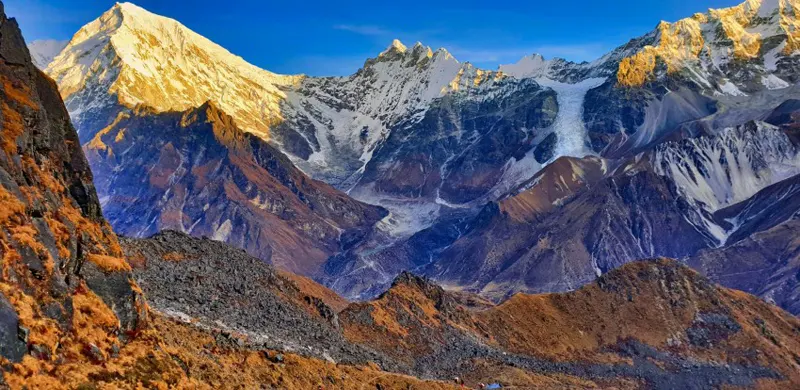
This Langtang Gosaikunda Trek Itinerary will dive you through the amazing glaciers, hills, landscapes, and panoramic snow-covered mountains such as Langtang, Annapurna, Kangchenop, Ganesh, and many more.
Furthermore, this trek is known as the journey to find buried wealth since it encompasses many landscapes and cultures from Gosaikunda and beyond. Shisapangma (8027 m), also known as Gosaithan, is the highest peak in Tibet’s Langtang area.
The 12-day Langtang Gosaikunda Trek is the perfect trekking route to fill you with an amazing trekking experience, and it is also one of the 12 national parks in Nepal. Langtang National Park is home to different types of climatic regions, from warm subtropical areas to chilly alpine regions.
Langtang National Park is also home to unique plants like Juniper, Himalayan blue poppy, Yarsagumba, etc., and animals like the rare red panda, goat-like Himalayan Thar, Himalayan Black Bear, and colorful Himalayan Monal birds.
This Langtang Gosaikunda Trek itinerary is less crowded due to the devastating earthquake in 2015. This journey will also aid in supporting local communities and exploring the outstanding local culture and traditions of the Tamang and Sherpa of the Tibetan region.
This trek begins in the small village of Syabrubesi, after a drive from Kathmandu to here. It goes through lush forests of rhododendron flowers, oak, and bamboo trees towards the Lama Hotel, passing by amazing Tamang villages and leading to the Kyanjin Gompa monastery (3830 m), a Tibetan Buddhist temple.
When you’re hiking toward Kyanjin Gompa, make sure to stay on the left side of the special Buddhist Mani Stones (Prayer Walls). The next day, you will spend your day here acclimatizing, hiking to Tsergo Ri, and again returning here.
Similarly, you go down to the Lama Hotel and head towards Thulo Syabru. Then, from there, you ascend to Singh Gompa and hike to Gosaikunda Lake. After exploring this area, you will descend back to Singh Gompa and head to Dhunche.
During this incredible Langtang Gosaikunda Trek itinerary, you can enjoy the beauty of glaciers such as the Lirung Glacier, Yala Glacier, and others. You will be driving back to Kathmandu from Dhunche.
The Langtang Gosaikunda Trek is a money-worthy trek for each step.This adventure will present you with a scenic (fantastically high, really impressive and marvelous) natural beauty and you will have some undoubtedly meaningful experiences during the trip.
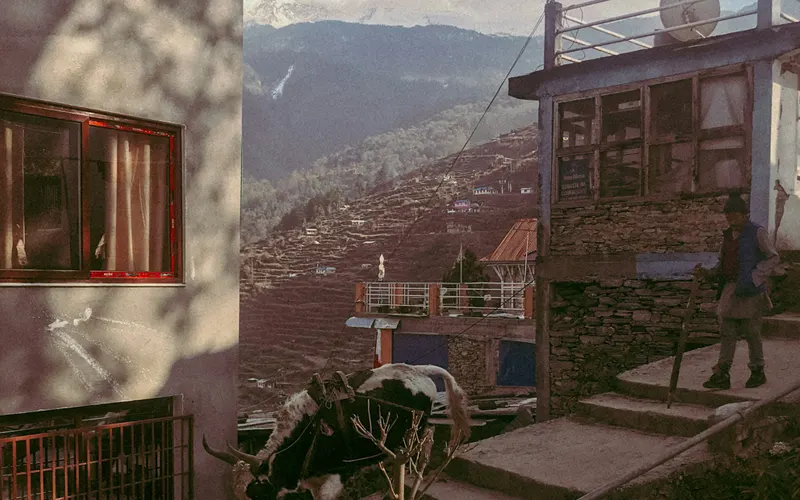
Today, we are venturing deeper into the wilds of Langtang Valley, leaving behind the more crowded trekking path in our Langtang Gosaikunda Trek. We’ll begin our trek with an easy downhill walk to the riverbank, passing through lovely juniper forests. After that, we’ll be ascending towards Thulo Syabru village, inhabited by the Tamag people.
This trail takes us through a dense forest with birch, oak, pine, and rhododendron trees. We can view the beautiful vistas of the Ganesh Himal and Langtang Himalayan ranges on our trial.
Once we reach Thulo Syabru, we can explore the village together interacting with locals as well as eating some traditional food for dinner. You’ll spend overnight at the Thulo Syabru Hotel.

We’ll head for the Gosaikunda trek after having our tasty breakfast. We’ll climb steeply uphill, reaching Phoprang Danda at 3930 meters, which is known for the best sunset views over Ganesh Himal.
We’ll have our lunch here and continue our journey through pleasant uphill trails and blue pine forests, passing by the government farming office. Then, we’ll gradually reach Singh Gompa. Singh Gompa is also called Chandanbari, which will be our last stop for today. We’ll stay overnight in a lodge here.


The amazing part of this Langtang Gosaikunda Trek itinerary is that you can do the Langtang Gosaikunda Trek at any time of the year. But you need to do extra preparation for winter and monsoon treks due to possible challenges. If you want to go trekking in winter and monsoon season, they have their benefits, along with some difficulties.
But the best seasons for this trek are undoubtedly autumn and spring. During these seasons, the area is vibrant and stunning, making it ideal for your Langtang Gosaikunda trek itinerary. The reasons Autumn and Spring are the best times for visiting Langtang Gosaikunda Trek are mentioned below:
Autumn (September to November): The summer is the prime time for trekking in Nepal with the journey to Langtang Gosaikunda Trek being one of them. The warm and stable weather allows daytime temperatures to be in the range of 20 to 28°C while the lowest temperatures could go down to 6 to 10°C during nighttime.
In the fall, visitors get stunning views of the clear sky, bright green forests, and Rocky Mountains to name a few as well as have a few chances of experiencing unexpected rain and snow, which increases their camping and hiking time.
Along with that, the other season’s best festivity time, particularly the two major festivals of Dashain and Tihar, are also opportunities for newcomers to dive into the Nepali culture and traditions.
Spring (March to May): If you want to enjoy most of the time in this Langtang Gosaikunda Trek Itinerary, spring is the second-best time to trek the Langtang Gosaikunda route, when nature flaunts its beauty.
The average day temperature is between 18°C to 30°C, with nighttime lows of 6°C. March through May is a good month to visit. The absence of verdant meadows will be your initial observation.
The environment is defined by very little precipitation and extremely low temperatures, which make it possible to see the most breathtaking vistas of the snow-covered mountains.
Should you be a photogenic type of person, you will notice rhododendron flowers that are in full bloom in the forest, and this will make your photos look even more fascinating. It is one of those seasons when the woods are painting themselves beautifully and thrilling the hearts of people with spectacular recreational experiences.
The Langtang Gosaikunda Trek is an incredible journey through the untouched Langtang region. Your first day of hiking will begin in Syabrubesi and end in Dhunche. Tsergo Ri, at 5033 meters, is the highest point of this climb.
So, in case you have any signs of altitude sickness during this climb, please notify your tour guide immediately to ease your condition. You’ll acclimatize in Kyanjin Gompa. This trekking involves lots of ups and downs trials which can add some physical challenges.
The Langtang Gosaikunda Trek Itinerary covers a total of 117 km distance from Kathmandu city. The rough road is about 35 km from Trisuli to Syabrubesi. You’ll have to walk 5-7 hours on each day. If you are physically fit and athletic then it might add a plus point in your trekking journey making it easy.
The adventurous Langtang Gosaikunda Trek is a difficult destination for most individuals due to its diverse terrain, including narrow ridges and rough landscapes that stretch across 60–80 kilometers. You will be encountering steep hills each day while walking for 5-7 hours, facing ups and downs that will be tough for your body.
You will start from Syabrubesi at 2380 meters. This journey will start with some steep sections, but it will gradually get easier with time. For beginners, it will be pretty tough.
Moving forward towards Langtang village will require another 6-7 hours of uphill trekking. It will be worthwhile to walk because the highest point, Kyanjin Gompa, standing at 3900 meters, will offer precious views.
Sometimes trekking might be particularly tough, with slopes containing rocks, but proper navigation and physical endurance are the keys to keeping moving forward.
As the altitude increases, sickness will be a concern while trekking. Usually, when trekking to high places, as you climb higher, the air starts to get thinner, which means there will be less oxygen. Due to the lack of oxygen in higher places, like Langtang Gosaikunda, sickness will be a big concern to tackle.
This can cause us to feel like we are out of breath, and some of the symptoms might be seen, such as nausea, headaches, dizziness, and fatigue. As we have already mentioned earlier, Kyanjin Gompa is at 3900 meters, which is the highest point where most of the trekkers get altitude sickness.
Even though not all of us will experience altitude sickness, it is crucial to know the signs. In case you start to feel uneasy, it will be better to immediately go back down to a lower place so that your body will allow itself to recover.
Furthermore, to assist your body adjust to the altitude more successfully, drink plenty of water throughout the journey. Hydration is also vital for preventing altitude sickness.
In the Langtang Gosaikunda Trek Itinerary, you will have to hike for an average of 5-7 hours each day. As this is a moderate-level, difficult trek, you can also complete it with ease if you are healthy and fit. You’ll be walking for about 6 hours from Syabrubesi to the Lama Hotel.
You’ll have to hike for a maximum of 7 to 8 hours and a minimum of 4 hours. The highest elevation reached is 4,380 m at Gosaikunda Lake. You’ll be walking a minimum on your fifth and ninth days of the Langtang Gosaikunda Trek Itinerary on the way to Tsergo Ri and Gosaikunda Lake.
Similarly, you have to walk a maximum of 7-8 hours on your fourth, sixth, eighth, and eleventh days on the way to Kyanjin Gompa, Lama Hotel, Singh Gompa, and Dhunche, respectively. And also, the walking duration depends on the pace of your walk as well.
During the 12-day Langtang Gosaikunda Trek, you’ll stay in tea houses, which range from basic to standard, depending on altitude and location. As you ascend higher, accommodations will be simpler and more rustic. You’ll find cozy rooms with comfy beds, pillows, mattresses, and warm blankets with shower facilities.
You’ll find Western-style toilets in lower altitudes and squat toilets in higher altitudes. We suggest you carry toilet paper, as it may not be provided. You can find hot showers in most of the tea houses, but you may have to pay an extra charge for using that kind of facility.
During the Langtang Gosaikunda Trek, you will find hygienic foods. You can enjoy options like bread with honey, cheese, jam, and butter, boiled or scrambled eggs, pancakes, cornflakes, and many more for your breakfast.
You can have a variety of choices for lunch, like fried rice with eggs and vegetables, sandwiches with cheese and eggs, mixed vegetable pizza, momos, chowmein, and spaghetti with tomato or garlic sauce. You’ll have a traditional Nepali khana set for dinner in every teahouse, featuring freshly cooked rice, lentils, curry, pickles, ghee, green vegetables, roti, etc.
You will get tea or coffee during your three-time meal. However, you have to pay by yourself for the alcoholic and non-alcoholic drinks and all hot and cold drinks. You can find drinks like wines, vodka, beer, Coca-Cola, etc., but we do not recommend drinking them while you are going trekking.
Moreover, you have to pay for the meals and hotel while you are in Kathmandu. We don’t cover that in our package. You may have to share accommodations during the trek if the lodge is crowded.
You can find several trekking routes, each offering a unique experience in the Langtang Region. Here are some of the alternative routes you can choose:
When you reach at Kyanjin Gompa, you will encounter such unique and extraordinary places as a 14th-century Tibetan monastery and a factory of cheese. The most striking 360-degree views are shown here: Langtang Lirung Mountain, Shisha Pangma, and three other peaks.
You’ll be heading to Lauri Binayak Pass, Phedi, Tharepati, Kutumsang, and Chisopani, along with places like Thulo Syabru, Singh Gompa, and Gosaikunda Lake in the standard Langtang Trek. You’ll be exploring.
The Langtang Gosaikunda Trek is a perfect option for beginners who want to explore the Himalayas. This trek doesn’t demand previous high-altitude trekking experience or special climbing skills. You just have to be brave enough to explore and enjoy the Himalayas.
An average individual who feels comfortable walking for 5 to 7 hours a day is reasonably fit for this trip. This trip will lead you through diverse landscapes, ending at Gosaikunda Lake, which is located at 4,380 meters high and offers awesome views.
In the 12-day Langtang Gosaikunda trek, safety is prioritized, so the rest of the days will be included in this trip to help the trekkers adjust to the high altitudes. Rest days will be beneficial in reducing the risk of altitude sickness. The adventurous Langtang Trek also involves meetings between the local peoples of the Nepalese Tamang and Sherpa communities.
For beginners who are seeking an adventurous Himalayan adventure and want to make memories, have beautiful moments with different communities, and observe breathtaking scenery, this trip is perfect for them.
You don’t need any technical or climbing skills for the Langtang Gosaikunda Trek. But you just need to be physically and mentally fit to start this trek. You have to walk rough uphill trails, which require a good level of fitness; otherwise, you’ll get tired easily and lose all your energy.
This 12-day trek is of moderate difficulty, so you don’t need to go through intense training for this trek. But you have to walk an average of 5-7 hours daily during this trek. So, you need to be well-prepared for the Langtang Gosaikunda Trek.
You can do exercises and activities like short hikes, swimming, long walks, cycling, jogging, and running to build up your cardiovascular fitness and keep your energy levels high. You’ll need good stamina, energy, endurance, and strength for the trek.
Moreover, you need to have a positive mindset and feed positive energy into your subconscious mind that will help you keep going and stay safe during this whole trek.
In today’s world, the internet for staying connected and electricity for charging devices to stay connected are two of the most important needs of an individual. On this trip, you can stay connected and also charge your gadgets, but it’s better to know a few things.
Wi-Fi is available in many tea houses and generally costs around USD 2 to USD 4 per use. Though the quality of Wi-Fi varies with altitude, generally lower areas have better connections. Some places also offer free Wi-Fi, marked with a sign.
However, connection speeds can be slower sometimes due to high demand. Having a local SIM card is more preferable for stable internet connections because local networks are available up to Kyanjin Gompa.
Two famous mobile service providers in Nepal, Ncell and NTC, offer coverage. Though Ncell provides better service in this area, both Ncell and NTC provide suitable data packages for internet usage at affordable prices, usable wherever network signals are available.
Sometimes the network might be slow and spotty, especially in bad weather. So it is recommended to use landline phones available at tea houses in emergencies because landline phones are more reliable.
Electricity is available mostly in lower-altitude areas that are connected to the national electricity grid of Nepal. Tea houses and settlements receive electricity from the central power supply of the country, though occasional. Power cuts can occur.
In higher-altitude areas, solar power is common, but it provides a lower voltage and is also dependent on the weather. Tea houses generally charge USD 2 to USD 4 per hour for electricity use, which makes charging expensive if you have a lot of gadgets. It is highly recommended to bring power banks for the backup of your gadget’s battery to minimize expenses.
Before you embark on trekking through the Langtang Region, it is mandatory to procure a Langtang National Park entry permit and a TIMS card (Trekkers’ Information Management System).
If you are from SAARC country, the price will be approximately NPR 300 (USD 2.5). You have to provide a photocopy of the passport and two passport-sized pictures to get the permit.
We’ll be covering all your transportation charges in our Langtang Gosaikunda Trek package. We’ll pick you up from your hotel in Kathmandu. Then, we’ll be taking a public bus to Syabrubesi. This drive will take about seven to eight hours to reach Syabrubesi.
In this trek, there will be no use of such transportation as you are mostly going to walk. The only times we use transportation are when going from Kathmandu to Syabrubesi and vice versa. It will take 7-8 hours to return from Syabrubesi to Kathmandu via public bus.
If you plan for the Langtang Gosaikunda Trek, it’s better to have travel insurance before commencing your journey. Because travel insurance ensures safety and well-being as well as helps you reduce unexpected financial burdens.
We know that the weather and life itself are very unpredictable, so having travel insurance will help you cover medical expenses, emergency evacuation, emergency helicopter rescue, personal injury, repatriation expenses, and any illness.
Good travel insurance offers peace of mind and covers any issues that may arise during your vacation. Make sure you buy insurance from a reputable company that covers all you need. If you’re having difficulties finding one, we can assist you choose a reputable provider.
Firstly, an adventurous Langtang trip is an exciting journey from which you can expect a complete package of excitement. In this exciting journey, you will be offered stunning views of majestic mountains like Langtang Lirung, Morimoto, and Gangchenpo, as well as opportunities to explore the dense pine forests full of wildlife such as snow leopards and red pandas.
On clear days, you will be able to catch a peek at Shisapangma, one of the most prominent peaks in Tibet. Secondly, this trek will also provide you with an opportunity to explore culture with friendly Nepalese locals from the Tamang and Sherpa communities.
You will have a chance to interact and also learn about their unique language, traditions, and Buddhist heritage. Trekking in Langtang is recommended during festival times because at that time you will be able to witness local rituals and ceremonies, leading to an enhancement of your knowledge of vibrant culture.
Thirdly, the hospitality of the local communities plays an important role in sharing conversation and cultural exchanges with visitors, fostering connections, and making this trek a pleasurable experience.
The Langtang Gosaikunda Trek is also suitable for families, which means this trek is almost suitable for all ages who feel comfortable walking. Being a trek full of entertainment and adventurous packages, it is also budget-friendly, which attracts trekkers from around the world.
Next, trekking here will offer you glimpses into the national part of Nepal, which contains endangered wildlife such as Himalayan deer and red pandas, so this adds educational elements to this trip as well. Not only endangered animals but also a variety of flora, including colorful rhododendrons, will surely enhance the trekking experience with its vibrant ecosystem.
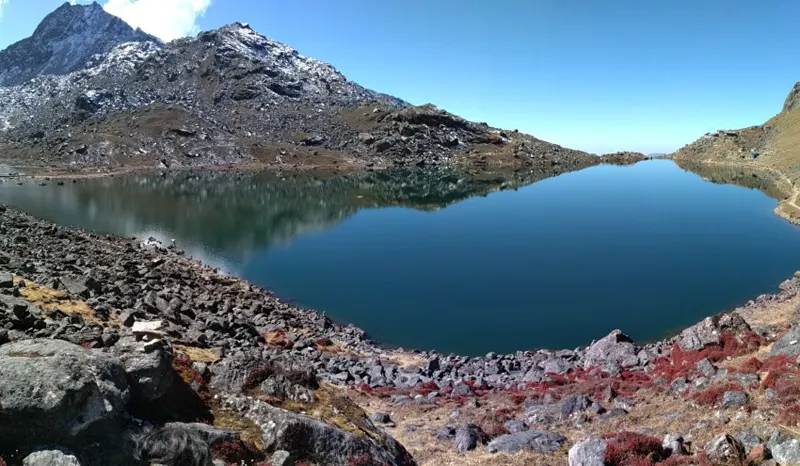
Moreover, the highlight of this trek is that it provides you with an opportunity to visit sacred lakes like Gosaikunda, which is revered by two Nepalese communities, which are Hindu and Buddhist.
If you want to practice religious beliefs with local communities, then you can also take holy baths in the pristine waters during the spring season. In addition, most pilgrims visit this holy lake to take holy baths, and it is believed that taking baths in this holy lake will purify their souls through various sins.
This ritual is followed by Hinduism, which believes an ancient story had Lord Shiva, who mediated for several years in the Himalayas of Nepal and Tibet, take a bath in this lake. So, this lake holds spiritual significance, which is the reason behind the attractions for the visitors.
This 12-day trek will be adventurous, starting from Syabrubesi at 2380 meters to Langtang Gosaikunda at 4,380 meters, offering stunning views of majestic mountains.
The Langtang Gosaikunda Trek is also known as a beginner-friendly trek, so you don’t need prior trekking experience. This trek includes diverse landscapes and altitudes, so if you are physically fit and comfortable walking for around 5 to 7 hours a day, then you are ready to go.
This Langtang trek offers an enjoyable combo as it contains breathtaking views of top-notch mountains like Langtang Lirung and Dorie Lakpa. The hospitality offered by the locals of Langtang village and Kyanjin Gompa provides a pleasant experience of religion and culture.
Before starting the trek, you will need an entry permit for Langtang National Park and the TIMS (Trekkers’ Information Management System) card, which is easily obtainable in Kathmandu and other designated locations.
The level of difficulty is moderate, which encourages even first-time trekkers to participate in this trek with good physical preparation. Trekking in Langtang is about climbing up to altitudes over 3,000 meters, so acclimatization is essential to managing the altitude risks.
Guides are essential for safety and navigation purposes, so the answer to this question is yes. Especially according to recent regulations in Nepal that require a guide for trekking in Nepal. Hiring a guide is beneficial, as he or she will offer insights into local culture and assist in emergency situations.
Generally, packing clothes for layering at varying temperatures is important. You have to pack your clothing, footwear, trekking gear, including trekking poles, and a sleeping bag. First aid supplies, toiletries, documents, and some snacks for cravings. Power banks for charging gadgets are also highly recommended.
No one can predict the future, so it is recommended to take travel insurance for medical emergencies, trip interruptions, and loss or damage to our belongings. As we are trekking at high altitudes, taking insurance is recommended for safety. It provides coverage in remote areas, but somehow access to medical facilities may be limited.
It is possible to stay connected on this trek, but when talking about a strong internet connection, the internet connections here are limited and unreliable. Somehow, in lower altitudes, the average internet connection is here, though it might be spotty, whereas in remote and higher altitudes, internet connections are poor.
It is recommended to carry enough Nepali currency for the expenses as we are trekking at remote altitudes, so ATM acceptance is rare along this route.
1050 US$
Total Cost:
US$ 1250




 Write a Review


