


Mardi Himal Trek
5/5 based on 05 reviews

Trip Duration
8 Days
Group Sizes
5+
Transportation
Tourist Bus
Destination
Nepal
Max. Altitude
4500m
Best Season
March-may & Sept-Dec
Activities
Trekking

Difficulty
Easy
Meals
B.L.D.

Start & End Point
Kathmandu
Accommodation
Hotel/lodge
Hiking is typically the first thing that people think of when they think about Nepal. One of the most well-liked and stunning hiking routes in Nepal’s Annapurna Region is the 8-Day Mardi Himal Trek. Even though it is one of the least frequented and most well-liked short treks in Nepal, it provides superior views of Machhapuchhre and Annapurna.
Mardi Himal Trek offers you to experience unique wildlife, unspoiled landscapes, local culture, and dramatic topography. Despite having many other classic multi-day hikes in Nepal, trekking to the Mardi Himal has instantly become a favorite for its natural beauty and historical routes.
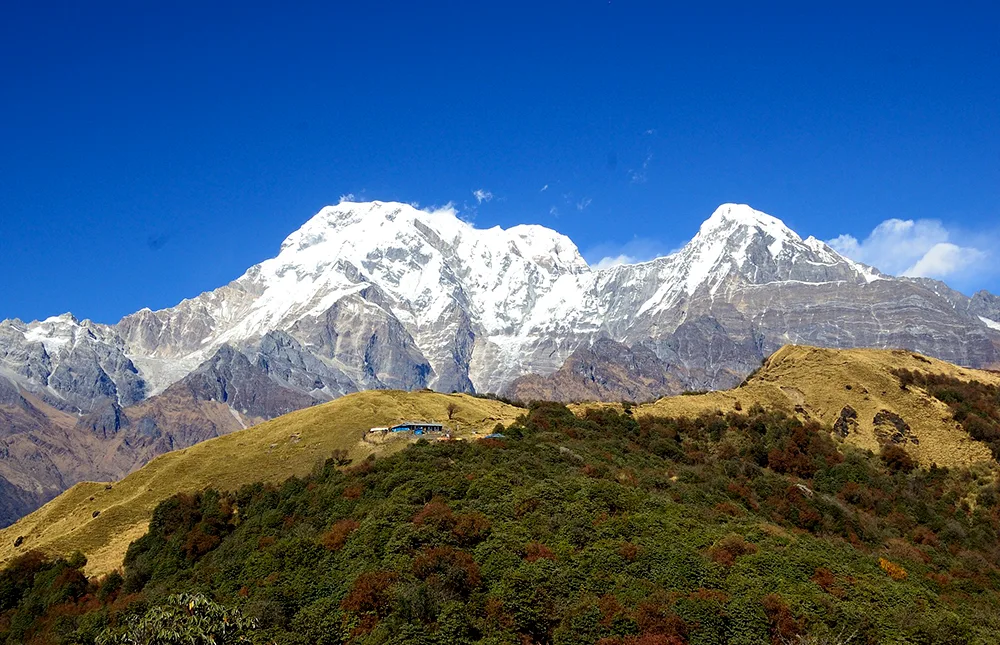
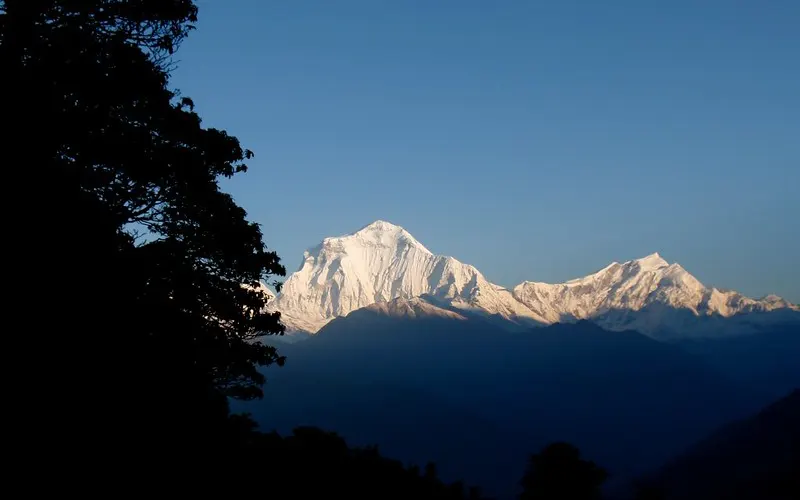
You will have the once-in-a-lifetime experience to soak in the beauty of stunning views of snow-capped peaks like Annapurna I, II, III, IV, Dhaulagiri, Machhapuchhre, Himchuli, Thapa Peak, Tukuche Peak, Gangapurna, Lamjung Himal, and many other mountains, along with lovely forests, rivers, wildlife, and local villages.
The Mardi Himal Base Camp is the primary trekking attraction of this eight-day Mardi Himal Trek. Trekking through the world’s largest protected area, the Annapurna Conservation Area will take you past a variety of plants and animals, including juniper, pine, birch, and rhododendron, as well as wild buffalo, monkeys, and wild boar.
You’ll be passing through a narrow path through green woods, streams, and villages, ascend to a rhododendron forest at about 3,300 meters. If you want to capture the best moments during your 8-day Mardi Himal Trek, the best time to visit is in the autumn (mid-September to November), when the weather is clear and the mountain views are spectacular.
In this Mardi Himal Trek itinerary, your journey will begin in the capital city of Nepal, Kathmandu. You’ll be taking a tourist bus from Kathmandu to Pokhara, which will take 7-8 long hours to drive. Then, the next day, you drive for an hour to Phedi from Pokhara and initiate the trek from there.
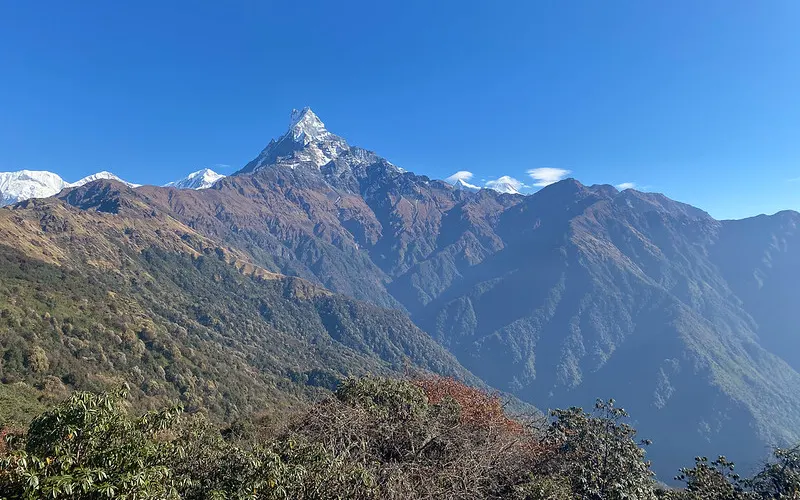
You will be hiking to Pothana from Phedi. Then, the next day, you’ll walk to the forest camp, passing through lush rhododendron forests. From the Forest Camp, the hike continues to High Camp, offering splendid views of Mt. Machhapuchhre (Fishtail).
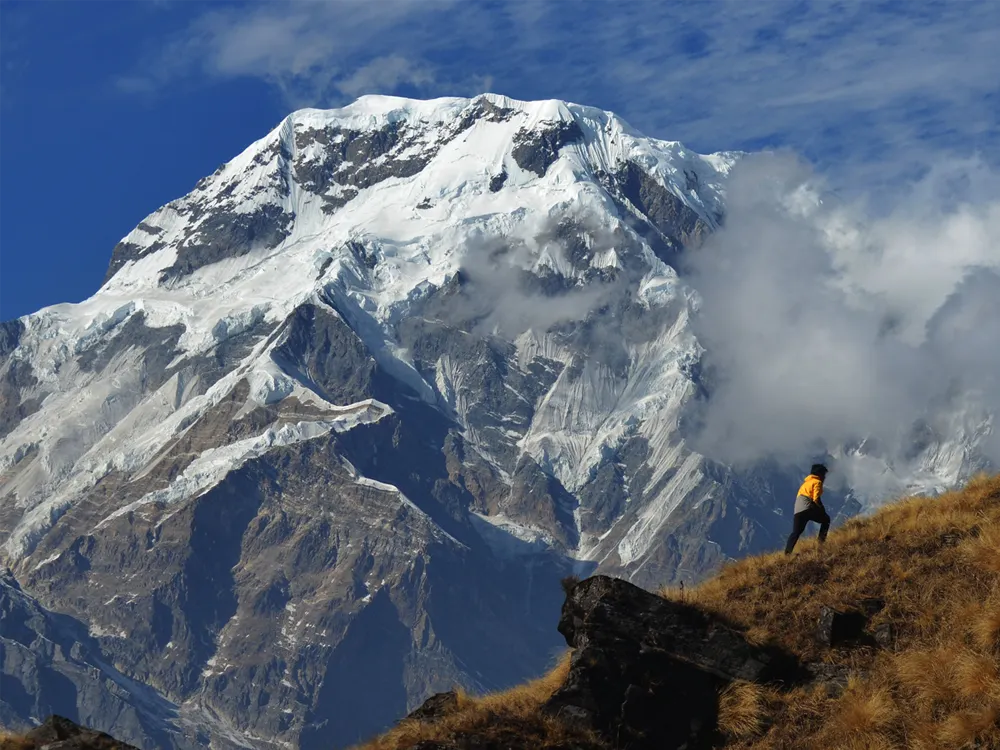
The following day of this 8-day Mardi Himal Trek, you are going to hike to Mardi Himal Base Camp at 4550 m elevation, where you will witness magnificent views of Mardi Himal and Mt. Annapurna, before returning to High Camp for the night.
Similarly, the following day, after breakfast, you will descend to Siding (1700 meters). From Siding, you will trek to Saidighatta and then return to Pokhara by jeep. You can tour the magnificent city of lakes, Pokhara, in the evening.
The last day of this 8-day Mardi Himal Trek involves a drive from Pokhara to Kathmandu Valley via tourist bus. This will be the end of the enriching Mardi Himal Trekexperience after reaching Kathmandu city.
Therefore, the 8-day Mardi Himal Trek in Nepal’s Annapurna Region is the ideal trekking route for you to choose if you enjoy short, sweet treks and are a beginner. So, grab your stuff and be ready to hike across this unexplored Nepali treasure.
Your 8-day Mardi Himal Trek starts with a long ride from Kathmandu to Pokhara after the morning breakfast. It’s a 205-kilometer journey to reach Pokhara from Kathmandu city, which will take around 7-8 hours. Although the distance is not very long, Nepal’s terrain and bumpy roads can make you feel very far and tiring.
You’ll be passing through green hills and lush jungles overlooking most of the Trisuli River for most of the day during this road trip. You’ll soon feel quieter and more peaceful after going further from the city.
We’ll reach Muglin after hours of driving, which is the midway point between Kathmandu and Pokhara. After crossing a bridge, we’ll head towards Pokhara. As we get closer to Pokhara, you’ll see the sights of Mount Annapurna and Machhapuchhre.
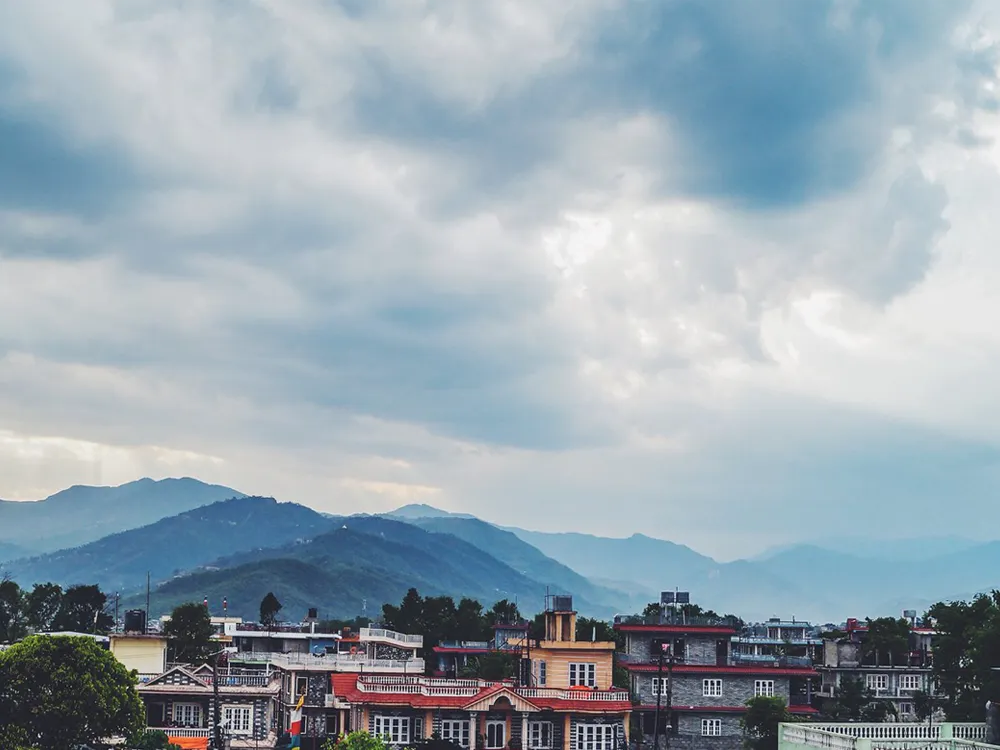
After arriving in the magnificent city of lakes, Pokhara, you will be captivated by its beautiful sceneries, tranquil lakes, hills, and more. Pokhara serves as the gateway to notable treks such as the Annapurna Base Camp (ABC) and Poon Hill Trek.
This will be your first day for your 8-day Mardi Himal Trek in Pokhara. You can rent bikes in the village to roam around the town. You’ll spend the night in a comfortable lodge in Pokhara.

We will begin trekking on this, the second day of our 8-day Mardi Himal Trek. We’ll have breakfast and then depart from our hotel early in the morning. Our hotel lobby will be where the vehicle is waiting. From our Pokhara hotel, we’ll take a Jeep to Phedi, the starting point of the hiking, which will take approximately one hour.
After arriving in Phedi, your Mardi Himal Trek begins with a walk to Pothana. We’ll be climbing the stairs for about 1.5 hours, walking through many local shops and picturesque villages along the way.
When we reach Dhampus, we’ll be resting some time and having our lunch there to energize our bodies for the hike. We’ll descend through a beautiful forest until we arrive at Pothana. You’ll be treated to marvelous landscapes and terraced fields during this hike.
We’ll be checking out the teahouse after reaching Pothana. This village has a lot of accommodation options, but we’ll stay in the most comfortable place. We’ll spend our second night at Pothana on this 8-day Mardi Himal Trek.
We’ll be leaving early in the morning after having our hearty breakfast. Today, you have to walk around 6-7 hours to reach the forest camp at an elevation of 2554 meters, covering approximately 7.9 kilometers. So, you can be tired, so make sure you stay hydrated and fueled properly during this trek.
Our 8-day Mardi Himal Trek third-day journey begins on a varied trail, shifting from rocky terrain to dirt paths and then into the quiet depths of the forest. We’ll hike uphill for about an hour until we reach Deurali. From this place, you will be able to view the mesmeric Fewa Lake, Pokhara Valley, and majestic snow-covered mountains like Annapurna and Dhaulagiri.
We’ll be continuing our hike through the jungle towards Forest Camp, which lives up to its name with dense tree cover all around. You can see forests filled with birch, birch, rhododendron, oak, hemlock, maple, and more, providing shade and a cool breeze.
As we continue hiking, the trail will become steeper. We’ll go up a small trail on top of a hill, then descend briefly before ascending again to reach Forest Camp. When we eventually arrive, you’ll be astounded by the breathtaking scenery all around. We’ll spend the night at Forest Camp, resting up for the next day’s adventures.

Following a delicious breakfast, we’ll head to the High Camp on the fourth day of our 8-day Mardi Himal itinerary package. Today we’ll be hiking 12.2 kilometers, which might be a difficult walk for novices.
We’ll travel through a deep woodland with plenty of moss and lichen. You’ll see stunning rhododendron flowers and breathtaking vistas of Annapurna South, Machhapuchhre, and Hiunchuli. After a few hours, we’ll arrive at Low Camp, a popular place for hikers to enjoy breathtaking sunrises and sunsets over Annapurna.
We’ll walk through a steeper trail, which is hard to climb. As we continue moving forward, we can see the landscape becoming more barren, with fewer trees and more rocky paths leading up to High Camp. Then we’ll reach High Camp after long hours of hiking.
We’ll spend the night in a lodge, enjoying the stunning sunset view. Tomorrow, we’ll travel to Mardi Himal Base Camp. So, we recommend that you go to bed early and get enough rest before tomorrow’s exciting Mardi Himal Trek.
We are starting our trek early in the morning after a mouth-watering breakfast at Mardi Himal Base Camp. Even though today’s 8-day Mardi Himal Trek journey will be filled with some challenges, we are still going to have a great day.
During our hike, we can witness several panoramic vistas of stunning mountains. We will hike across rocky terrain and high slopes, passing through lush green fields. After reaching the upper viewpoint, we can take in the natural splendor of the Annapurna and Machhapuchhre peaks.
When our trail is coated in snow, it may become slick. We will eventually arrive at the 4350-meter-high Mardi Himal Base Camp after walking for roughly 30 minutes from the Upper Viewpoint. This will be the most memorable and memorable occasion from our eight-day Mardi Himal Trek.
As a reward for our strenuous trekking adventure, we will enjoy the breathtaking mountain views. Then we’ll have lunch here before hiking back to High Camp for the night. We’ll return along the same road we took previously. After arriving, we will spend the night at the same teahouse where we spent previously.
On this sixth day of our 8-day Mardi Himal Trek, we will be trekking from High Camp to Siding Village. Our journey will be very easy compared to the past few days. So, as usual, we’ll leave High Camp after devouring the morning breakfast.
We’ll head back to Low Camp, passing through several villages and rice terraces. We can see and experience the rural farming areas all around. You’ll find extraordinary vibes compared to your daily hectic life, making your soul happy.
We continue through the lush jungles and farmlands until we arrive at Siding Village. We’ll have walked around 8.5 kilometers from High Camp to Siding Village in 6 to 7 hours. Siding Village is also one of the popular tourist spots with a peaceful environment.
You can also explore this village during your leisure time and learn about the culture of the local community. You’ll be spending your overnight in this very village. Tomorrow, we’ll be returning to Pokhara.
This is going to be the last day of your 8-day Mardi Himal Trek itinerary. Today we will trek down from Siding Village to Saidighatta after having our final delectable breakfast in this area.
We’ll be passing through rice fields, traditional Gurung villages, and lush forests, along with viewing beautiful landscapes. We’ll finally reach Saidighatta after walking for 3–4 hours.
Then, from here, we are going to take a Jeep to Pokhara and drive back there, which takes about an hour and a half. After reaching Pokhara, you can explore Pokhara, the city of lakes, as you’ll be leaving tomorrow early in the morning for Kathmandu.
You can visit Fewa Lake, Begnas Taal, Rupa Taal, or other famous places and spend the whole day traveling. You can also go to clubs, go cycling, go boating, and do many other activities that you like. This will be our final night in Pokhara after the thrilling Mardi Himal Trek.


You can travel on an 8-day Mardi Himal Trek in any season. But the best seasons you can select for this journey are the autumn and spring seasons. Here is the list of seasons explained below for trekking to Mardi Himal Base Camp.
Autumn (September to November): Autumn is one of the best times to go for the Mardi Himal Trek if you want to avoid the intense heat and muddy trails of the monsoon season. You can enjoy your life to the life to the fullest in this season with clear blue skies and less probability of rainfall. You can feel the temperatures in the autumn range from 10 to 15 degrees Celsius.
In the autumn, you can do more than just hike and enjoy the views. The trail conditions are excellent, so you won’t need to pack many clothes. Therefore, due to following reasons, the autumn season is considered the ideal season for trekking to Mardi Himal.
Spring (March to May):Spring, from March to May, is the perfect time to trek in the lush greenery of Mardi Himal because nature is at its most beautiful in this very season. You can observe landscapes with green vegetation and blossoming rhododendrons, which will be quite attractive.
You can feel the temperature range from 10 to 20 degrees Celsius, with up to 20 degrees during the day and up to 10 degrees at night. The surroundings are very fresh and clean during this season. Most of the trekkers choose this season as they can enjoy the most breathtaking views of the landscapes and mountains.
Monsoon/Summer (June to August): You can enjoy the Mardi Himal Trek despite the rainfall. Temperatures can range from 25 to 15 degrees Celsius in the summer and 22 to 5 degrees Celsius in the monsoon.
You must bring appropriate clothing and equipment such as waterproof bags, rain boots, and so on, as the terrain might be difficult owing to slippery and muddy conditions.
Winter (December to February): Many trekkers don’t like to trek in this season due to the very cold weather, with temperatures ranging from 10 degrees to below freezing.
But if you love hiking in winter and are ready to face any challenges thrown your way, you can still get an adrenaline-filled awesome experience. However, we do not recommend this trekking to anyone, especially beginners.
This 8-day Mardi Himal Trek journey begins in Pokhara, where you will drive to Phedi Village and begin walking to Pothana. You will pass through a variety of sceneries before arriving at Mardi Himal Base Camp, which has a peak elevation of 4350 meters.
You will be experiencing a moderate-level, challenging trek during this journey. You will be starting your hike from 1130 meters above sea level at Phedi village to the highest elevation of 4350 meters covering a total of 42 kilometers of distance throughout 5 days’ time frame.
On average, you have to walk for five to seven hours per day. However, depending on how swiftly you walk, the amount of time you spend walking could vary significantly. Therefore, you need to remain composed and hydrated throughout the Mardi Himal Trek to face challenges and exhaustion.
This 8-day Mardi Himal is great for both beginners and experienced trekkers alike who prefer less crowded trails. Similarly, it is moderately challenging, with no need for special climbing skills. You need to hike through steep, rocky, and rough trails, especially from High Camp to Base Camp.
Several factors increase the difficulty of this trek. Some factors, like weather, fitness level, and terrain, determine the difficulty level of the trek. So being physically fit helps a lot. However, you can complete this trek at ease with some required preparations.
Another important element to consider is the severity of the trek, often known as altitude sickness. You are climbing to the highest point, 4350 meters above sea level. As you ascend, the air pressure and oxygen levels fall, which may have an impact on you. You need to be cautious and notice any sort of symptoms that are affecting your body.
If you have symptoms of acute mountain sickness (AMS), such as headaches or nausea, please notify us immediately, and we will stop and rest immediately. There will be a lower risk of AMS because we will take pauses every thousand meters to acclimatize.
However, you need to state your conditions to the tour guide so that we can ensure safety while trekking. Similarly, we’ll be checking your pulse and oxygen saturation and heart rate twice daily to monitor your well-being. You need to drink a lot of water during trekking to prevent altitude sickness and avoid any liquor and unnecessary food items.
Mardi Himal Trek is a short, 8-day moderate-level trek. So, this would be less challenging than the Annapurna Base Camp (ABC) and Everest Base Camp (EBC). You don’t have to walk for many days to reach your targeted destination. You need to walk an average of 5 to 7 hours each day to cover the 42-kilometer trekking distance.
You will be walking a minimum of 3–4 hours per day when hiking to Pothana from Phedi Village and to Saidighatta from Siding Village during your return on the second and seventh days, respectively.
The maximum days are the fourth and fifth days, where you’ll trek for about 8 hours each day. On the fourth day, you trek from Forest Camp to High Camp, and on the fifth day, you continue to Mardi Himal Base Camp from High Camp. These are the two challenging days of trekking because you have to ascend rocky terrain and high slopes.
However, this is only speculation about the maximum and minimum walk per day, according to our previous experiences. This trekking walk can be minimized if we walk at a fast pace, taking little rest along the way.
You will find a range of accommodations, including hotels, lodges, teahouses, and restaurants, during this 8-day Mardi Himal Trek in Nepal’s Annapurna region. You will be offered a warm, homelike atmosphere with delicious food, making you feel like part of the family.
Some of these places have facilities like attached bathrooms, hot water, and sometimes Wi-Fi and charging spots. You’ll find modern accommodations at the lower elevations, but they become simpler with fewer facilities. You might have to stop in local villages where such facilities may not exit as well.
During your 8-day Mardi Himal Trek, you’ll mostly find traditional Nepalese food like dal bhat, along with pancakes, chop suey, and pasta. And the plus point is that you’ll be lucky to experience the fresh food from local farms, even though it’s not gourmet quality.
Since, as we know, trekking burns lot of calories, you should prioritize eating healthy foods during this exciting trek to keep your energy up. You would be having three meals a day, along with tea and coffee. Not only this, but our package includes fresh fruit every evening after dinner.
The food will be highly based on the menu offered by the hotel or tea house, which usually serves Nepali dishes only. But only some of the teahouses and lodges may prepare you something western upon your request, if available.
Likewise, we strongly don’t recommend you drink any hard or soft drinks apart from water, and our package does not include this. So, you have to pay by yourself in case you want to have such types of drinks.
There are many alternative routes you can choose for the Mardi Himal Trek. You can choose any of the following alternative routes based on your interest and desire, and we will make an itinerary plan according to it:
Start in Ghandruk and finish in Siding Village: Many trekkers opt for this route to Mardi Himal after finishing the Poon Hill or Annapurna Base Camp trek. In this route, you start from Ghorepani and trek to Forest Camp, encountering steep downhill sections and uphill climbs. We suggest you walk to Tolkha and take a bus from there when returning to Pokhara.
Start in Landruk and finish in Siding Village: Landruk offers you the quickest route for the short Mardi Himal Trek. You can walk an additional 12 kilometers from Kande instead of taking a jeep or local bus, as the road there is quite rough and bumpy. And it will cost you about 5 dollars when driving from the bus and 9 dollars in a jeep.
But for our own safety, we should walk on this route. The road becomes more dangerous and slippery, especially in monsoon seasons. A lot of trekkers have bad experiences while taking buses in this area.
Start in Ghandruk and finish in Kande: You can begin your Mardi Himal Trek from Kande. The roads here are in better condition compared to Landruk, making your travel very easy. You can complete this route in 5 days. This route is suitable for those who have limited time and travel in a very comfortable way.
Absolutely, beginners can easily join this 8-day Mardi Himal Trek without any doubt. In fact, beginners should start their trekking journey with this exciting Mardi Himal Base Camp Trek to kickstart their hiking experience.
This trekking will provide an overall experience of the difficulty level of climbing at higher elevations to beginners. Unlike ABC and EBC trekking, this is a very short trek where you can capture the taste of the required experience to go on the next trekking adventure.
If you are a trekking enthusiast, this will make you ready for the next challenging trekking journey. You’ll find the hardest part of this trek when hiking from High Base Camp to Mardi Himal Base Camp and descending from Low Camp to Siding Village due to the steep terrain.
However, you need to prepare physically and mentally before planning for this trip. If you are not well prepared, then you may find it very difficult as a beginner due to the weariness and higher altitudes. But we’ll always be ready to assist if you are having any sort of problem related to trekking. All you need to do is inform us of any problems and follow our directions and guidelines to complete this trek easily.
No matter where you go to enjoy life to live to the fullest, especially on the trekking journey, it is very crucial to be physically fit and healthy. This is a medium-level compelling-difficulty trek, although you don’t need climbing expertise or tools to summit the peaks. You do need to have good stamina, determination, and good health.
Some parts of the 8-day Mardi Himal Trek are very strenuous. And, some days, you need to walk for a maximum of 8 hours until you reach your destination. So, you better start preparing yourself for this trek by doing cardiovascular exercises, walking instead of driving, practicing yoga and meditation, hiking uphill and downhill, eating healthy, and learning about the trek.
If you are well-prepared before beginning your journey, you will find it much easier to complete this walk. You will not become fatigued easily and will be able to maintain a great deal of stamina. And, not only this, you will be ready to face any kind of unexpected situation that may occur on this trek. Moreover, this will save a lot of time during trekking and cover more distance, minimizing the walking hours.
During your trek on the routes of Mardi Himal, it is important to charge your essential gadgets so that they are charged enough all the time to capture memories and, mainly, to stay connected. In this trek, you will be able to find the facilities for charging your gadgets at tea houses and lodges available along the route.
Some of the accommodations offer free electricity and internet access as well, though the majority of them charge additional fees of around 2 to 3 USD. We suggest you carry power backups or portable chargers to make sure your gadgets are always power-backed up.
Although internet access and electricity are available in certain spots, like tea houses and lodges, please don’t expect them to be strong; they might be slow and also unreliable in some places due to the remote and mountainous terrain.
We will recommend that you purchase local SIM cards with data packages because this way you will be able to access the internet on your own terms, which will be reliable for you whether you are inside or outside, even at trekking time.
Additionally, be aware that the cost of electricity for charging your devices and internet services can fluctuate depending on the places you stay during the trek at Mardi Himal. As you move forward to higher altitudes, these services can be limited, and this will be challenging, so the chances of increasing the cost of using these infrastructures are high.
We are informing you about expenses that you might incur while trekking at Mardi Himal because it will help you to plan and prepare effectively for these incidental expenses.
Lastly, be informed that you will find facilities to charge your gadgets and have internet access at tea houses and lodges. However, it will be better to always be ready for the occasional problems that might occur, such as electricity issues (load-shedding) and technical issues.
It’s common for remote areas to suffer from these issues. The natural beauty and rugged terrain of the Himalayas will make you forget these issues and enjoy your trekking experience to the fullest.
For the 8-day Maratha Himal Trek, you must have two permits: the TIMS Card (Trekking Information Management System) and the ACAP permit (Annapurna Conservation Area Project). After having these two permits, you will not require any other special authorization for trekking in Nepal’s Annapurna region. Thus, the cost and significance of these two permits are stated below:
This permit is valid for one entry and exit and can be used for multiple treks within the park as long as you do not exit. You can buy both ACAP and TIMS permits at the Tourist Information Center in Kathmandu or Pokhara. These offices are open from 10 a.m. to 5 p.m. and are closed on weekends and holidays.
You’ll need your passport, insurance details, four passport-sized photos, and the contact details of someone in Nepal to get both permits. Make sure you bring all the required documents to get these permits.
The cost is NPR 2000 (about USD 18) per person for foreign citizens and NPR 300 (about USD 4) for SAARC citizens. You can get the TIMS card from the same places and with the same process as the ACAP permit.
Important Note: Permit fees and regulations may change, so it’s a good idea to check the current requirements. If you’re unsure about the guidelines, we can assist you before you head out for the Mardi Himal Trek from Pokhara.
We’ll be using very few means of transportation during this 8-day Mardi Himal Trek. As with most of our Mardi Himal itinerary, we’ll be hiking to reach our destinations. On the first day, we will be taking a tourist bus ride from Kathmandu city to Pokhara. It will take approximately 8–9 hours to reach the beautiful Pokhara city.
Then, on our second day of the Mardi Himal Trek, we’ll be driving for an hour to Phedi from Pokhara via Jeep. Similarly, we’ll be taking a jeep from Saidighatta to Pokhara during our return to Pokhara.
On the final day of your journey, you will return to Kathmandu city by tourist bus along the same route. Then, after we arrive in Kathmandu, we’ll drop you off at your accommodation, capping up this unforgettable and enjoyable adventure trek.
As we all know, trekking in the remote and challenging terrain of the Mardi Himal involves risks where medical evacuation and treatment can be very expensive. So, before you start any trip, you must arrange your travel insurance.
This assures that you are protected on your 8-day Mardi Himal Trek in case of an unexpected event, such as the need for rescue or medical treatment. You should understand that your life is more important than any quest, no matter what the payoff is. Safety is our main priority, and having the correct insurance guarantees that you’re prepared for any adventure while minimizing risks.
While no one usually checks for insurance directly, you are required to provide details about your insurance company when filling out the necessary forms. This will help you enjoy your thrilling hiking journey with peace of mind, knowing you’re protected in case of any sort of emergency.
The Mardi Himal Trek is quite fascinating for individuals who are willing to trek because of its moderate difficulty level. This trek fits perfectly for beginners in trekking who want to experience calm and serene trekking away from busy routes.
Trekking here will take you to the base of the mountains, where you will be surrounded by another mountain named Machhapuchhre. This mountain is also famous for its name in English; we know this mountain as Fish Tail.
Beyond the beautiful mountains, this trek provides us with an opportunity to travel through a varied landscape of picturesque villages and verdant forests filled with rhododendrons (in season). Each day we pass on this trek, we will observe pretty natural waterfalls and diverse terrain that change with the day.
You will be greeted with the friendly hospitality of the locals, get to witness their customs being practiced in day-to-day life, and observe their clothing, which is quite different from our own.
Engaging in conversation with the locals will be beneficial as you will be able to learn more about the intricate religious culture, which will enhance your trekking experience. Encountering amiable Nepalese people who provide a warm welcome to you would be a highly fulfilling experience.
Lastly, as we have started our trek from Pokhara, after finishing the trek, you will be again returning to Pokhara, where you can relax in this beautiful city surrounded by hills and the stunning Annapurna mountains.
Then we will enjoy Pokhara, from boating on Fewa Lake to exploring local markets. Pokhara offers a perfect ending to your Mardi Himal adventures. Overall, this trek is the best from start to finish, so give it a try and make a lifelong memory.
We should ascend about 4350 meters above sea level during this trek to reach Mardi Himal Base Camp.
When you are 3000 meters above sea level, you run the danger of getting altitude sickness. The elevation of the Madhyamik Base Camp is 4350 meters. As a result, you must take the necessary safety precautions and actions.
Yes, you can trek the Mardi Himal independently, without a guide or group. This trail is very safe and quite suitable for solo trekkers. But we suggest you have a guide if you are a beginner.
We recommend you have travel insurance so that it covers helicopter evacuation, medical expenses, theft, etc., for the Mardi Himal Trek. Although this is a medium-level-difficulty trek, any unexpected incidents may happen. So, travel insurance will play your safety key to ensuring a better travel experience.
Yes, you can bring a sleeping bag for the Madi Himal Trek, especially in peak seasons. When you get to higher altitudes, the availability of the lodge will be limited. If the lodge is packed, we can also use sleeping bags to minimize issues. It would be advisable to have a sleeping bag with you.
This trek is generally safe for solo female travelers. The route is well-traveled, and locals are helpful if assistance is needed. So, a solo female didn’t have to worry too much when traveling alone, as Nepalese people are friendly and will help her along the way in every way possible.
It will take 5 days to reach Mardi Himal Base Camp if we follow our standard 8-day Mardi Himal Trek itinerary.
The Mardi Himal Trek covers approximately 42 kilometers from Phedi Village to Saidighatta, excluding all the transportation.
You will need a sleeping bag, trekking poles, thermal clothing and breathable underwear, trekking gloves, trekking shoes and socks, a jacket, windcheater, fleece for warmth, trekking shirts, pants, shorts, and sunglasses for Mardi Himal Trek.
The ideal months to hike to Mardi Himal are September, October, and November. This post-monsoon season promises bright skies and stunning views, as well as rich rhododendron and oak forests along the way.
850 US$
Total Cost:
US$ 950




 Write a Review


